


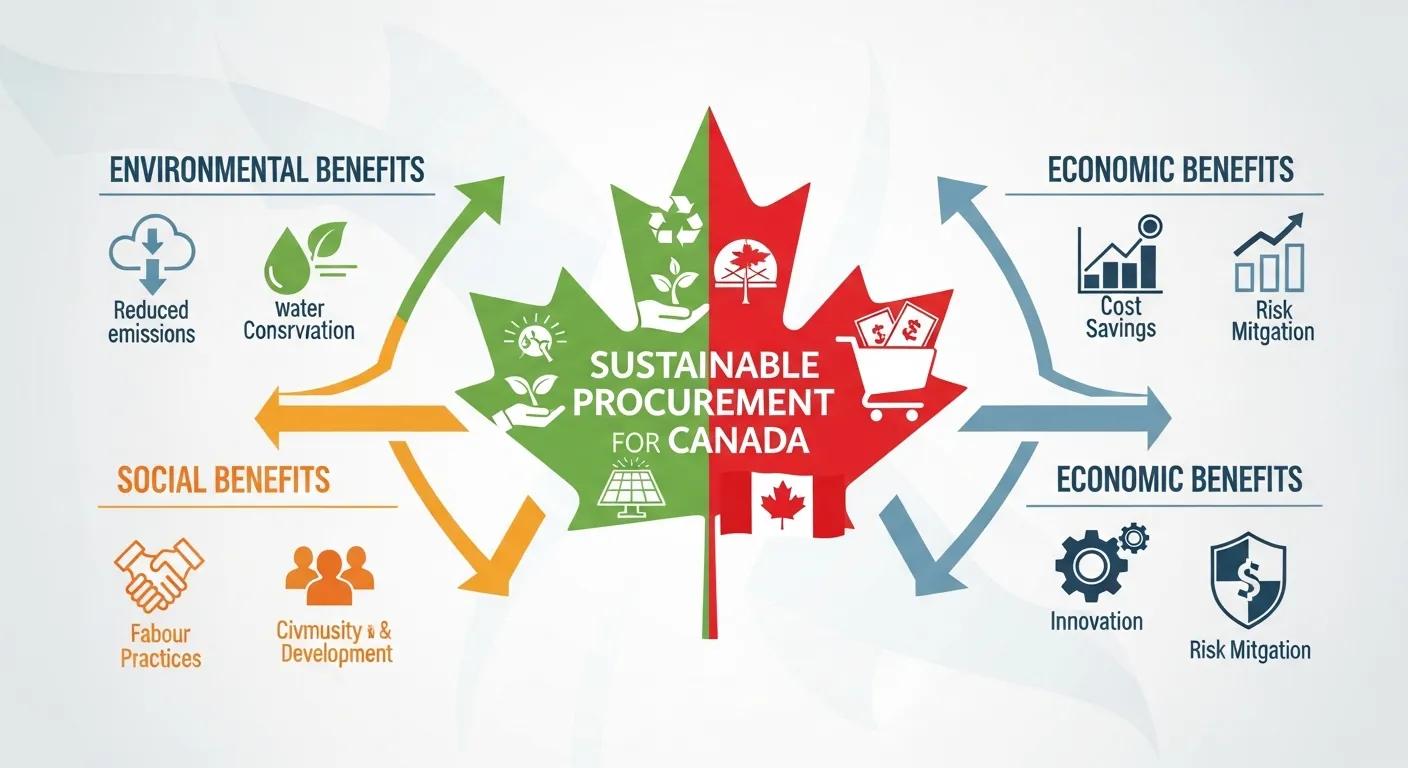
Green procurement refers to purchasing decisions that prioritize environmental performance across a product’s lifecycle, from raw materials and manufacturing through use and end-of-life management. This guide explains how Canada’s green procurement policies shape buyer requirements, provides practical steps for implementing sustainable purchasing across hospitality, healthcare, and industrial operations, and highlights supplier solutions to meet procurement obligations. Businesses face regulatory triggers, stakeholder expectations, and operational opportunities when they adopt green procurement, and this article lays out the policy landscape, economic and reputational benefits, product options, implementation checklists, and resources for ongoing support. Readers will find concise definitions of federal and local policies, measurable benefits and cost metrics, a catalog of eco-friendly commercial supply categories relevant to Canadian buyers, and actionable vendor-vetting and reporting templates to operationalize sustainability objectives. Throughout, we integrate practical supplier capabilities so procurement teams can match policy requirements to verified products and services while maintaining accountability and measurable outcomes.
What Are Canada’s Green Procurement Policies and How Do They Impact Businesses?
Green procurement in Canada encompasses policies and practices at federal, provincial, and municipal levels that encourage or require the purchase of products and services with lower environmental impacts. These policies operate by embedding environmental criteria into tender documents, specifying certifications, and requiring evidence such as lifecycle assessments or environmental declarations; the mechanism reduces procurement-related emissions and drives demand for low-impact materials.
This strategic approach to purchasing is further elaborated by research highlighting how green procurement aligns government acquisitions with broader environmental objectives.
Canadian Green Procurement Strategies & Sustainable Purchasing
Green procurement attempts to align government purchases with eco-friendly processes and focuses on the development and acquisition of sustainable products. It exemplifies a type of ‘strategic’ procurement effort made to ensure long-term adherence to specific policy goals like sustainability. It supports key goals like sustainable consumption, climate change mitigation, and responsible resource management.
Lessons from Canada for green procurement strategy design, A Migone, 2024
The practical impact on businesses includes modified bid requirements, documentation burdens for suppliers, and opportunities to compete on sustainability performance rather than price alone.
Procurement teams must therefore align product specifications and supplier documentation with applicable policy clauses to remain eligible for public contracts and to reduce long-term operational costs.
The next subsection summarizes federal-level policy drivers and the Buy Clean initiative that specifically targets material carbon intensity in public infrastructure projects.
Overview of Federal Green Procurement Policy and 'Buy Clean' Initiatives
Federal green procurement policy centers on reducing the environmental footprint of public purchases by setting expectations for supplier documentation, product standards, and lifecycle considerations, and these policies are administered through government procurement authorities. The Treasury Board Secretariat and central procurement bodies encourage the inclusion of environmental factors such as energy performance, recycled content, and product certifications when awarding contracts, and they also provide guidance on evaluation weightings and acceptable evidence.
The Buy Clean initiative focuses on lowering embodied carbon in construction materials by promoting low-carbon material specifications and requiring manufacturers to provide material-specific emissions data, which impacts suppliers to public infrastructure projects. For businesses, this means early engagement with procurement teams to understand required declarations and planning to collect Environmental Product Declarations (EPDs) or equivalent LCA outputs that demonstrate material carbon intensity for bid compliance.
-
Requirement for environmental documentation during bidding.
-
Preference or scoring advantages for low-carbon materials.
-
Need for lifecycle and carbon-intensity evidence for construction-related supplies.
This overview leads into how provinces and municipalities vary in standards and how those differences affect localized procurement processes.
Provincial and Municipal Green Procurement Standards in Canada
Provincial and municipal green procurement frameworks differ in scope and enforcement, ranging from voluntary guidance to mandatory clauses in public tenders, and these variations influence how suppliers approach regional bidding. Some provinces emphasize specific product attributes such as recycled content or energy performance, while certain municipalities run pilot programs that prioritize circular procurement practices or supplier take-back arrangements; procurement managers must therefore verify local tender requirements before preparing submissions.
Variability means suppliers should maintain flexible documentation packages—certificates, EPDs, and product datasheets—that can be tailored to local expectations, and buyers should build standardized evaluation criteria to compare offers equitably. Practical advice for businesses is to check local procurement portals or procurement office guidance for region-specific clauses and to request clarification early in the procurement timeline to avoid disqualification for missing environmental evidence.
- Review tender clauses for explicit environmental criteria.
- Prepare a modular documentation package for regional requirements.
- Engage procurement contacts early to clarify acceptable evidence.
Why Should Canadian Businesses Adopt Sustainable Purchasing Practices?
Sustainable purchasing delivers measurable economic, reputational, and compliance benefits that extend beyond a single procurement transaction, and it does so by reducing lifecycle costs, aligning with customer expectations, and mitigating regulatory risk. Economically, durable, low-impact products often require lower total cost of ownership through reduced energy, maintenance, disposal, and replacement expenses; this mechanism converts higher upfront spend into lifecycle savings. Reputationally, public and private sector customers increasingly prefer suppliers with demonstrable environmental credentials, strengthening brand trust and market access. Finally, compliance with public procurement policies ensures eligibility for government contracts and reduces contractual and regulatory exposure. The following subsection quantifies economic benefits and provides a simple metrics table to support business cases for sustainable purchasing.
Beyond product-specific savings, strategic energy procurement, such as corporate power purchase agreements for renewables, offers significant economic and environmental advantages for businesses.
Corporate Renewable Energy Procurement in Canada
Corporate power purchase agreements (CPPA)s made up the majority of new wind energy PPAs signed in the U.S. in the last several years. Companies such as Google and Amazon have realized the environmental and economic benefits of partnering with renewable energy (RE) developers, directly, virtually, or through their utility, to bring new projects into the markets in which they operate. CPPAs allow companies to meet sustainability goals, reduce carbon costs, and achieve stable energy prices.
Corporate renewable energy procurement: comparison of the market in Canada versus the US to enable CPPAs in Canada, 2020
Economic Benefits and Cost Savings from Green Procurement
Green procurement often yields cost savings across a product’s lifecycle by reducing energy use, extending useful life, minimizing waste disposal fees, and optimizing logistics—mechanisms that translate into quantifiable ROI for organizations. For example, choosing durable textiles with higher lifecycle performance can lower total laundry and replacement costs in hospitality operations, and specifying concentrated cleaning chemistries can reduce packaging waste and transportation impacts for facilities.
This table demonstrates typical metrics procurement teams can use when presenting green procurement business cases.
| Benefit Category | Measurable Metric | Typical Range |
|---|---|---|
| Cost Savings | Lifecycle cost reduction (procurement + operations) | 5–30% over product lifecycle |
| Energy Reduction | Energy use per unit (kWh) | Varies by product; significant for appliances |
| Waste Reduction | Waste diverted or reduced (kg/year) | Facility-dependent; measurable via hauler data |
| Maintenance Savings | Reduced replacement frequency | 10–50% depending on durability improvements |
Enhancing Brand Reputation and Meeting Consumer Demand for Sustainability
Purchasing sustainable products signals corporate values and meets growing customer and stakeholder expectations for environmental responsibility, which in turn can increase preference and loyalty among clients and guests. Consumers and procurement partners often expect transparency and credible certifications, so specifying and communicating product attributes—such as organic textiles, eco-certified cleaners, or recycled-content supplies—becomes part of marketing and stakeholder reporting. Practical steps include prominently tracking and publishing procurement policies, requesting supplier certificates, and using standardized language in procurement communications to verify sustainability claims. Implementing these communication practices strengthens competitive positioning and supports access to contracts that award points for sustainability performance, which dovetails into selecting suppliers who can document credentials effectively.
Need Reliable Wholesale Supplies for Your Facility?
Hotels, healthcare facilities, restaurants, and commercial operations across Canada trust Linen Plus for consistent bulk supply and commercial-grade quality.

Bulk Wholesale Pricing
Competitive pricing for large-volume procurement.

Reliable Nationwide Supply
Consistent inventory and fast shipping across Canada.

Hospitality & Healthcare Grade
Products designed for demanding commercial environments.
-
Publish procurement policy highlights and supplier requirements.
-
Request certificates and EPDs as part of supplier onboarding.
-
Include sustainability performance in supplier scorecards and marketing materials.
In supporting buyers with eco options, suppliers such as Linen Plus Inc. can serve as wholesale distribution partners that provide a broad product range across hospitality, healthcare, and industrial sectors while offering procurement-friendly services. Linen Plus operates as an e-commerce information hub and wholesale distributor supplying bed and bath linens, guest-room essentials, medical and dental supplies, janitorial products, and facility solutions across Canada; their nationwide coverage, wholesale pricing with bulk discounts up to 20%, free shipping over $100, and account services such as dedicated support and flexible payment terms help procurement teams consolidate suppliers and simplify documentation requests. For procurement teams seeking to map product specifications to policy requirements, vendor partners who provide certification details and sample documentation reduce bid preparation overhead and make compliance more efficient. This supplier integration underscores how strategic vendor selection operationalizes the economic and reputational benefits discussed previously.
Which Eco-Friendly Commercial Supplies Does Linen Plus Offer for Canadian Businesses?
Procurement teams need clear product categories and certification attributes to write enforceable specifications; Linen Plus’s catalog includes eco-oriented lines that meet common procurement requirements for hospitality, healthcare, and facilities. Core product categories relevant to sustainable purchasing include organic textiles, eco-certified janitorial supplies, recycled-content facility items, and compliant healthcare disposables; each category has distinct procurement use-cases and certification expectations. The table below compares product lines, certifications or attributes, and procurement use-cases so buyers can map offerings to tender requirements and internal sustainability goals.
| Product Line | Certification / Attribute | Procurement Use-case |
|---|---|---|
| Organic Cotton Linens | Certified organic textile claim (example product: ZEN Bath Sheet – 100% Certified Organic Cotton) | Hospitality linen specifications requiring organic fibres and durability |
| Eco-Certified Janitorial Supplies | Low-VOC, biodegradable, concentrated formulations | Facility cleaning contracts seeking reduced toxicity and waste |
| Recycled-content Facility Supplies | Recycled plastic or paper content | Back-of-house and admin supply lists targeting circular materials |
| Medical & Dental Supplies | Single-use disposables with eco alternatives | Healthcare procurement seeking lower-impact disposables when permitted |
This table helps procurement teams include precise attributes and acceptance criteria in RFPs to ensure compliant supplier responses.
Organic Cotton Linens and Sustainable Textiles for Hospitality
Organic cotton linens deliver durability and reduced chemical inputs compared with conventional textiles, and specifying certified organic materials helps procurement align with environmental purchasing guidelines while addressing guest comfort. When drafting specifications, buyers should require certification statements, fiber content, and laundering performance metrics—criteria that address both sustainability and operational durability to calculate cost-per-use effectively. The ZEN Bath Sheet example—marketed as 100 percent Certified Organic Cotton and labeled eco-friendly luxury—illustrates a product attribute that procurement can reference when scoring linens for guest rooms and spa use. Operational considerations include laundering practices that preserve fabric life, supply replenishment lead times, and sample testing to validate softness, absorbency, and shrinkage before large orders are placed.
- Require certified organic declaration and fiber content.
- Include durability and laundering performance metrics.
- Request samples and lifecycle cost estimates to inform award decisions.
These steps help buyers evaluate whether premium eco-textiles meet both sustainability criteria and operational performance expectations.
Eco-Certified Janitorial and Facility Supplies for Industrial Use
Eco-certified janitorial supplies such as concentrated cleaners, low-VOC formulations, and biodegradable disposables reduce facility environmental footprints by minimizing hazardous discharges and packaging waste, and buyers should request certification labels and safety data sheets during vendor evaluation. Procurement criteria typically specify product performance standards, dilution ratios for concentrates (to reduce transport and packaging impacts), and end-of-life disposal guidance to support circularity goals. For industrial and large-facility contracts, bundling logistics—such as bulk ordering, scheduled delivery, and consolidation—can reduce emissions and handling costs, and suppliers that provide clear certification documentation simplify compliance verification. Including certification and dilution documentation in contracts also facilitates monitoring and supplier audits, which helps maintain long-term compliance with municipal or provincial green procurement clauses.
- Request eco-certification and SDS documentation.
- Specify concentrate usage and packaging reduction targets.
- Require supplier logistics plans for consolidated delivery.
After specifying required attributes, procurement teams should vet suppliers using structured criteria and scorecards to ensure credible claims and measurable outcomes, which the next section addresses.
How Can Canadian Businesses Implement Effective Green Supply Chain Management?
Effective green supply chain management begins with clear procurement policy, supplier vetting, lifecycle assessment integration, and measurable KPIs that link purchases to emissions and waste reduction goals. Supplier vetting assesses certifications, manufacturing footprints, and material sources, and lifecycle assessment (LCA) outputs such as EPDs inform decisions about embodied impacts versus operational benefits; this mechanism allows procurement to compare alternatives on a science-based basis. Measurement and reporting require selected KPIs, data collection processes, and a cadence for stakeholder communication to demonstrate program progress and adapt sourcing strategies. The subsequent subsection provides a practical vetting checklist and a sample supplier-scorecard table to operationalize evaluation criteria.
Canadian businesses are increasingly integrating these sustainability principles into their supply chain management, as evidenced by comprehensive studies on corporate practices.
Sustainable Supply Chain Management in Canadian Businesses
The purpose of this article is to explore the extent to which corporate sustainability principles are integrated into supply chain management (SCM) in corporations. Canada is used as a case study in this article. The study included a content analysis of one hundred Canadian corporate sustainable development reports and in-depth interviews with 18 Canadian experts on SSCM. The article highlights the wide array of ways in which Canadian corporations address SSCM issues.
A review of sustainable supply chain management practices in Canada, O Morali, 2013
Supplier Vetting and Lifecycle Assessment for Sustainable Procurement
Supplier vetting should follow a standardized questionnaire that requests certifications, material origin, manufacturing emissions, and any available LCA or EPD documentation, enabling procurement to score environmental performance consistently across bidders. A focused vetting checklist reduces ambiguity and speeds evaluation by making clear which documents constitute acceptable evidence—third-party certifications, EPD summaries, and material sourcing declarations are typically high-value items. Interpreting LCAs involves comparing functional units and scope boundaries; procurement should request summary LCA outputs in comparable units (e.g., kg CO2e per functional unit) and align evaluation scoring to policy priorities such as embodied carbon or recyclability. Integrating vetted results into procurement scoring ensures that sustainability claims are weighted appropriately relative to price and technical performance.
| Supplier | Criterion | Example Score/Threshold |
|---|---|---|
| Supplier A | Third-party certifications (organic, eco-label) | Meets ≥2 recognized certifications = pass |
| Supplier B | LCA/EPD availability | EPD provided with ≤ threshold kg CO2e per unit = pass |
| Supplier C | Supply chain transparency | Material origin disclosed and traceable = pass |
Measuring and Reporting the Impact of Green Procurement Initiatives
Measurement requires selecting KPIs such as carbon reduction (kg CO2e avoided), waste diverted (kg or tonnes), cost savings (lifecycle dollars), and supplier compliance rates, and establishing data sources and collection processes to calculate them consistently. Recommended tools range from simple procurement-spend spreadsheets to integrated sourcing platforms that tag purchases with sustainability attributes; the mechanism for measurement should include regular supplier reporting cycles and internal audits to verify claims. Reporting cadence often aligns with monthly operational reviews and quarterly sustainability updates for stakeholders, while annual reports can aggregate outcomes against corporate net-zero or circular economy targets. Clear KPIs and reporting templates create accountability and allow procurement programs to iterate on sourcing strategy based on measured outcomes.
- Define KPIs and data sources for each metric.
- Implement procurement tagging and supplier reporting requirements.
- Publish periodic internal and external summaries to maintain stakeholder alignment.
Operationalizing these steps often benefits from supplier partners that can provide consolidated documentation, bulk logistics, and account support; the integration with supplier capabilities is discussed next.
In practical implementation, suppliers like Linen Plus can enable green procurement by supplying documentation, offering consolidated logistics, and providing account-level services that simplify compliance. Linen Plus’s nationwide distribution, wholesale pricing with bulk discounting up to 20%, free shipping over $100, and dedicated account support help procurement teams manage product sourcing, reduce administrative overhead, and secure better total costs, while their product range includes items that meet common eco-attribute requests for hospitality, healthcare, and facilities. Buyers should request supplier-provided certification documents, EPD summaries, and sample testing from vendors during vetting to ensure that product claims align with procurement scoring. These supplier services act as enablers of green procurement, helping procurement teams meet policy requirements while maintaining operational efficiency.
What Are the Benefits of Corporate Sustainability Procurement in Canada?
Corporate sustainability procurement supports regulatory compliance, reduces supply-chain risk, and contributes to national goals such as net-zero emissions and circularity, delivering strategic advantages that extend beyond individual purchase decisions. By embedding environmental criteria into sourcing, organizations strengthen supplier resilience, reduce exposure to resource constraints, and open access to markets that prioritize sustainable suppliers. Procurement-driven sustainability also helps firms align with investor and stakeholder ESG expectations, which can influence financing and partnership opportunities.
The following subsections unpack compliance and national-goal alignment to illustrate how buying decisions contribute to broader strategic outcomes.
Regulatory Compliance and Risk Mitigation through Green Purchasing
Green purchasing reduces regulatory and contractual risk by ensuring that suppliers meet environmental clauses in tenders and that products satisfy evolving policy requirements, and this reduces the chance of contract penalties or disqualification. Examples of mitigation include requiring supplier certifications to avoid liability from hazardous materials and specifying low-carbon materials to meet Buy Clean or public-sector requirements. Monitoring compliance involves contract clauses for ongoing reporting, audit rights, and requirements for corrective actions if supplier claims are found insufficient, which provides procurement teams with enforcement mechanisms.
- Insert clear environmental evidence requirements in contracts.
- Reserve audit and corrective-action clauses for supplier non-compliance.
- Maintain a dynamic supplier list with verified documentation.
These measures support alignment with national objectives and the broader policy environment, which the next subsection details.
Contributing to Canada’s Net-Zero Emissions and Circular Economy Goals
Procurement choices such as selecting low-embodied-carbon materials, durable products, and options with take-back or recyclability provisions directly reduce supply-chain emissions and support circular flows, forming a logical chain from purchase action to national goal contribution. For example, specifying recycled-content facility supplies reduces demand for virgin materials while procuring durable textiles reduces replacement frequency, thereby lowering cumulative emissions and waste. Procurement teams can quantify these contributions by converting lifecycle improvements into estimated CO2e reductions and waste diverted metrics, and by tracking progress against corporate net-zero roadmaps to show contribution to national targets. Adopting circular procurement practices—prioritizing reusable and returnable packaging, service-based models, and repairable goods—creates operational outcomes that feed into corporate and national sustainability objectives.
- Prioritize low-embodied-carbon materials and EPD-backed choices.
- Specify recycled-content and take-back programs where available.
- Measure and report reductions to integrate into corporate net-zero accounting.
These procurement actions create enduring strategic value that aligns buying decisions with Canada’s broader climate and circular economy commitments.
Where Can Canadian Businesses Find Support and Resources for Green Procurement?
Businesses can access guidance and funding from federal, provincial, and municipal procurement authorities, industry associations, and supplier partners; combining these resources helps design compliant procurement strategies and build capacity. Key government bodies provide policy guidance, templates, and sometimes funding or incentives for low-carbon projects, while industry groups offer best-practice frameworks and training. Suppliers with procurement-ready documentation and consolidated logistics further reduce implementation barriers and can provide sample testing or account support.
Government and Industry Programs Supporting Sustainable Purchasing
A range of federal and provincial entities publish guidance, templates, and policy updates that procurement teams can use to align tender language and evaluation criteria with current standards, and industry associations provide training and peer frameworks for adopting best practices. Typical resources include central government procurement guidance on environmental criteria, municipal pilot programs supporting circular procurement, and industry association toolkits that translate policy into practical procurement language. Procurement teams should regularly consult official procurement notices and industry association updates to remain current with changes and to identify funding or pilot opportunities that might support sustainable purchasing initiatives. Using authoritative program materials accelerates internal policy development and ensures that procurement language meets the expectations of evaluating agencies.
- Central procurement policy guidance for environmental criteria.
- Provincial and municipal procurement portals for local clauses.
- Industry associations for toolkits and case studies.
These resources provide the foundational guidance procurement teams need to build compliant and effective sustainable purchasing programs.
Linen Plus’s Role in Facilitating Green Procurement Solutions
Linen Plus Inc. functions as a wholesale distributor and e-commerce information hub that can support procurement teams by supplying certified or eco-attributed products across hospitality, healthcare, and industrial categories while offering operational services that ease program implementation. Their product range includes organic cotton linens (for example, the ZEN Bath Sheet described as 100 percent Certified Organic Cotton), eco-certified janitorial products, medical and dental supplies, and recycled-content facility items—categories that align with common procurement requirements for sustainability. Operational advantages from Linen Plus include nationwide delivery, wholesale pricing with bulk discounts up to 20%, free shipping over $100, dedicated account support, flexible payment terms (such as net 30 for qualified customers), and a returns policy that simplifies procurement logistics. Procurement teams can leverage these supplier capabilities to consolidate documentation requests, secure bulk pricing, and reduce administrative overhead when responding to policy-driven sourcing demands.
- Request certification documentation and sample products for evaluation.
- Establish account-level terms and delivery schedules to support consolidated procurement.
- Integrate supplier-provided EPDs and certificates into bid submissions.
These actions help convert green procurement policy into concrete purchases that meet operational and compliance goals.
Frequently Asked Questions
What are the key challenges businesses face when implementing green procurement?
Businesses often encounter several challenges when adopting green procurement practices. These include navigating complex regulatory requirements, understanding the varying standards across federal, provincial, and municipal levels, and managing the documentation burden associated with environmental certifications. Additionally, companies may struggle with the initial costs of sustainable products, which can deter decision-makers focused on short-term savings. Overcoming these challenges requires a strategic approach, including staff training, stakeholder engagement, and the development of clear procurement policies that align with sustainability goals.
How can small businesses benefit from sustainable purchasing practices?
Small businesses can gain significant advantages from sustainable purchasing practices, including cost savings, enhanced brand reputation, and improved customer loyalty. By investing in eco-friendly products, small businesses can reduce operational costs through lower energy consumption and waste disposal fees. Furthermore, as consumers increasingly prefer environmentally responsible brands, adopting sustainable practices can differentiate small businesses in competitive markets. Additionally, compliance with green procurement policies can open doors to government contracts and funding opportunities, further supporting growth and sustainability initiatives.
What role do certifications play in green procurement?
Certifications are crucial in green procurement as they provide verifiable proof of a product's environmental claims. They help procurement teams assess the sustainability of products and suppliers, ensuring compliance with green procurement policies. Common certifications include Energy Star, USDA Organic, and various eco-labels that indicate reduced environmental impact. By requiring certified products, businesses can mitigate risks associated with non-compliance and enhance their credibility with stakeholders. Certifications also facilitate transparency in the supply chain, making it easier for companies to communicate their sustainability efforts to customers.
How can businesses measure the success of their green procurement initiatives?
Measuring the success of green procurement initiatives involves tracking key performance indicators (KPIs) such as cost savings, waste reduction, and carbon emissions avoided. Businesses can establish baseline metrics before implementing sustainable practices and then monitor changes over time. Regular reporting and audits can help assess compliance with sustainability goals and identify areas for improvement. Additionally, gathering feedback from stakeholders and customers can provide insights into the perceived value of green initiatives, helping businesses refine their strategies and enhance their overall impact.
What resources are available for businesses looking to improve their green procurement practices?
Numerous resources are available to assist businesses in enhancing their green procurement practices. Government agencies often provide guidelines, templates, and funding opportunities to support sustainable purchasing initiatives. Industry associations also offer training programs, best practice frameworks, and case studies to help organizations implement effective strategies. Additionally, suppliers like Linen Plus can provide eco-friendly products and necessary documentation, simplifying the procurement process. Engaging with these resources can help businesses stay informed about regulatory changes and access tools that facilitate compliance and sustainability.
How does green procurement contribute to corporate social responsibility (CSR)?
Green procurement is a vital component of corporate social responsibility (CSR) as it aligns purchasing decisions with broader environmental and social goals. By prioritizing sustainable products and practices, businesses demonstrate their commitment to reducing their environmental footprint and supporting ethical supply chains. This alignment not only enhances brand reputation but also fosters trust among consumers and stakeholders. Furthermore, integrating green procurement into CSR strategies can lead to improved employee engagement and satisfaction, as employees increasingly seek to work for companies that prioritize sustainability and social impact.


