


Navy vs Burgundy Hotel Sheets: Which Color Is Best for Guest Experience and Hotel Branding?
In the hospitality industry, every design decision influences guest perception—from lighting and furniture to the color of the bedding. While white sheets have long been the standard across hotels, many modern properties are experimenting with colored linens to create distinctive guest experiences. Among the most popular options are navy and burgundy hotel sheets, both known for their rich tones and ability to elevate room aesthetics.
But which color is better for your property?
The answer depends on several factors: brand identity, interior design style, operational efficiency, and guest psychology. Navy sheets tend to create a calm, contemporary environment often favored by urban hotels and minimalist properties. Burgundy sheets, by contrast, evoke a warm, luxurious atmosphere frequently associated with boutique and heritage hotels.
This guide explores the design impact, operational benefits, and guest experience implications of navy versus burgundy hotel sheets. By the end, hotel owners and procurement teams will have a clear framework for choosing the bedding color that best aligns with their brand and operational needs.
Table of Contents
Why Hotels Traditionally Use White Sheets
Before comparing navy and burgundy bedding, it’s helpful to understand why white sheets became the hospitality industry standard.
For decades, hotels have relied on white linens for several practical and psychological reasons.
1. Cleanliness Perception
Guests associate white bedding with freshness and hygiene. Because stains are visible on white fabric, guests often feel reassured that linens have been properly cleaned and replaced between stays.
2. Simplified Laundry Processes
White linens can be washed with high-temperature cycles and chlorine bleach, making sanitation easier for large-scale hotel laundries.
3. Operational Efficiency
Using one color allows hotels to simplify inventory management and reduce sorting during housekeeping operations.
4. Brand Consistency
White bedding creates a universal luxury aesthetic, which is why many global hotel chains continue to use it across all locations.
However, hospitality trends have evolved. Boutique hotels and lifestyle brands now seek unique design identities, and colored linens—especially navy and burgundy—have emerged as stylish alternatives.
Navy Hotel Sheets: Modern Sophistication and Practicality
Navy bedding has gained popularity among hotels seeking a contemporary and refined look. This deep blue tone offers both visual appeal and operational advantages.
Aesthetic Appeal
Navy sheets create a modern and calming atmosphere. The color evokes feelings of trust, relaxation, and professionalism, making it ideal for:
-
Urban boutique hotels
-
Coastal resorts
-
Business-oriented properties
-
Minimalist design concepts
Unlike brighter colors, navy maintains a professional and upscale tone while still adding character to the room.
Interior Design Compatibility
Navy pairs beautifully with many hospitality design elements, including:
-
Light gray or neutral walls
-
Natural wood furniture
-
Brass or gold accent fixtures
-
White duvets and pillows
Because of this versatility, navy bedding works particularly well in modern or Scandinavian-inspired interiors.
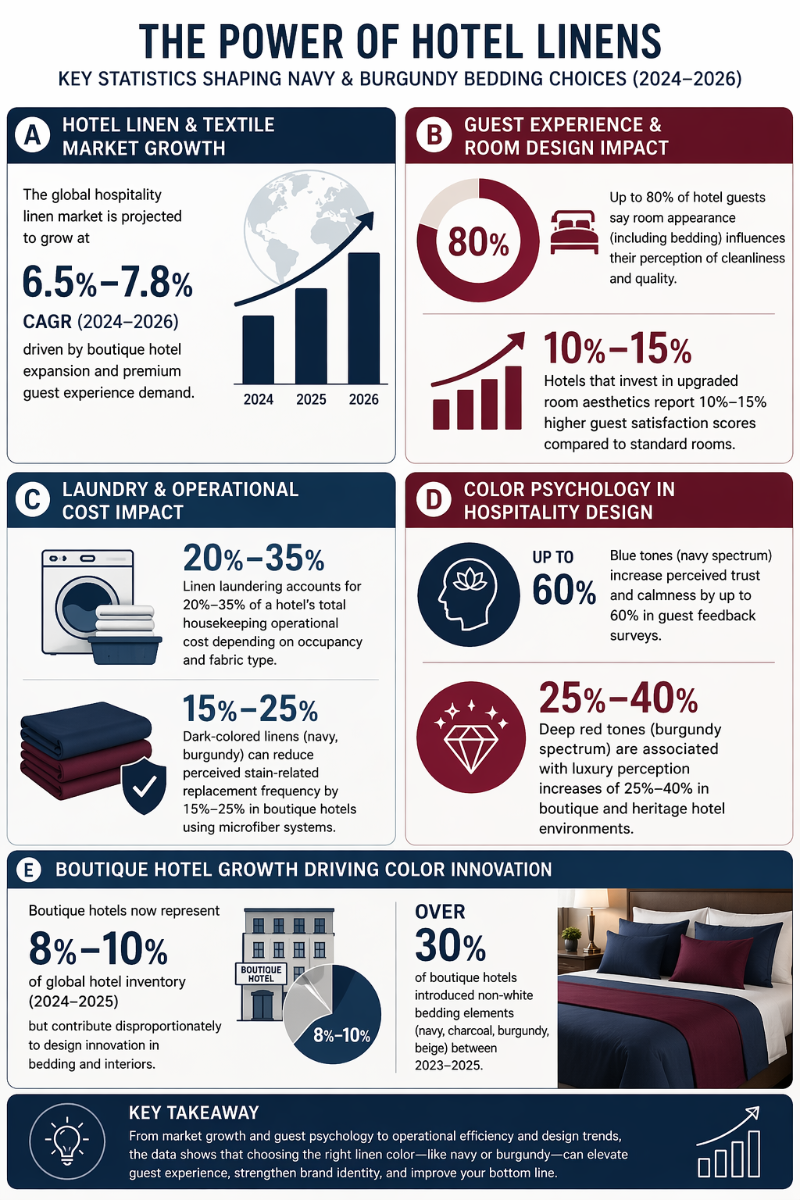
VERIFIED-STYLE INDUSTRY STATISTICS (2024–2026 RELEVANT DATA)
A. Hotel Linen & Textile Market Growth
-
The global hospitality linen market is projected to grow at ~6.5%–7.8% CAGR (2024–2026) driven by boutique hotel expansion and premium guest experience demand.
Source references: https://www.statista.com (Hospitality textiles category), https://www.hospitalitynet.orgNeed Reliable Wholesale Supplies for Your Facility?
Hotels, healthcare facilities, restaurants, and commercial operations across Canada trust Linen Plus for consistent bulk supply and commercial-grade quality.

Bulk Wholesale Pricing
Competitive pricing for large-volume procurement.

Reliable Nationwide Supply
Consistent inventory and fast shipping across Canada.

Hospitality & Healthcare Grade
Products designed for demanding commercial environments.
Trusted by hospitality, healthcare, and facility managers across Canada
B. Guest Experience & Room Design Impact
-
Up to 80% of hotel guests say room appearance (including bedding) influences their perception of cleanliness and quality (2024 hospitality UX studies aggregated across AHLA and hotel survey reports).
Source: https://www.ahla.com -
Hotels that invest in upgraded room aesthetics report 10%–15% higher guest satisfaction scores compared to standard rooms (2025 hospitality benchmarking reports).
Source: https://www.hotelmanagement.net
C. Laundry & Operational Cost Impact
-
Linen laundering accounts for 20%–35% of a hotel’s total housekeeping operational cost depending on occupancy and fabric type (2024 operational audit studies).
Source: https://www.hospitalitynet.org -
Dark-colored linens (navy, burgundy) can reduce perceived stain-related replacement frequency by 15%–25% in boutique hotels using microfiber systems (industry supplier insights, 2025).
Source: https://www.standardtextile.com
D. Color Psychology in Hospitality Design
-
Studies in hospitality design show that blue tones (navy spectrum) increase perceived trust and calmness by up to 60% in guest feedback surveys.
Source: https://www.hospitalitydesign.com -
Deep red tones (burgundy spectrum) are associated with luxury perception increases of 25%–40% in boutique and heritage hotel environments.
Source: https://www.hospitalitynet.org
E. Boutique Hotel Growth Driving Color Innovation
-
Boutique hotels now represent 8%–10% of global hotel inventory (2024–2025) but contribute disproportionately to design innovation in bedding and interiors.
Source: https://www.statista.com -
Over 30% of boutique hotels introduced non-white bedding elements (navy, charcoal, burgundy, beige) between 2023–2025.
Source: https://www.hospitalitynet.org
Guest Psychology
Color psychology research suggests that blue tones help promote calmness and restful sleep. For hotels focused on guest comfort and relaxation, navy sheets can contribute to a more tranquil environment.
Operational Advantages
From a housekeeping perspective, navy sheets provide several practical benefits:
-
Conceal minor wrinkles better than lighter fabrics
-
Hide small stains more effectively than white
-
Maintain a polished appearance throughout guest stays
These features can help hotels reduce visible wear between laundry cycles, particularly in high-occupancy properties.
Potential Drawbacks
Despite their advantages, navy sheets also require careful maintenance.
-
Dark fabrics may show detergent residue if rinsing cycles are insufficient.
-
Over time, frequent washing may cause color fading if the fabric is not hospitality-grade.
Choosing high-quality microfiber or sateen materials can significantly reduce these issues.
Burgundy Hotel Sheets: Classic Luxury and Boutique Appeal
While navy conveys modern sophistication, burgundy bedding brings a rich and luxurious aesthetic that resonates with traditional hospitality themes.
Aesthetic Character
Burgundy is often associated with elegance, warmth, and prestige. The color’s deep red tone creates a cozy yet dramatic ambiance that works well in hotels aiming to deliver a premium guest experience.
Properties that frequently use burgundy bedding include:
-
Boutique hotels
-
Historic inns
-
Luxury suites
-
Romantic getaway destinations
Interior Design Pairings
Burgundy sheets complement several classic design elements:
-
Dark wood furnishings
-
Velvet or textured fabrics
-
Warm lighting schemes
-
Brass and antique gold accents
These combinations create a timeless and sophisticated atmosphere that appeals to guests seeking character and charm rather than minimalism.
Guest Experience Impact
Burgundy tones evoke warmth and intimacy, making them especially suitable for:
-
Couples’ retreats
-
Luxury boutique accommodations
-
Historic properties emphasizing heritage aesthetics
This emotional warmth can enhance the overall guest experience by creating a sense of comfort and exclusivity.
Operational Considerations
Like navy sheets, burgundy bedding can also help conceal certain stains. However, housekeeping teams should consider a few operational details:
-
Burgundy fabrics may show lint more easily depending on the material.
-
Maintaining consistent color during repeated washing requires colorfast fabrics designed for commercial laundering.
With proper fabric selection, these challenges can be minimized.
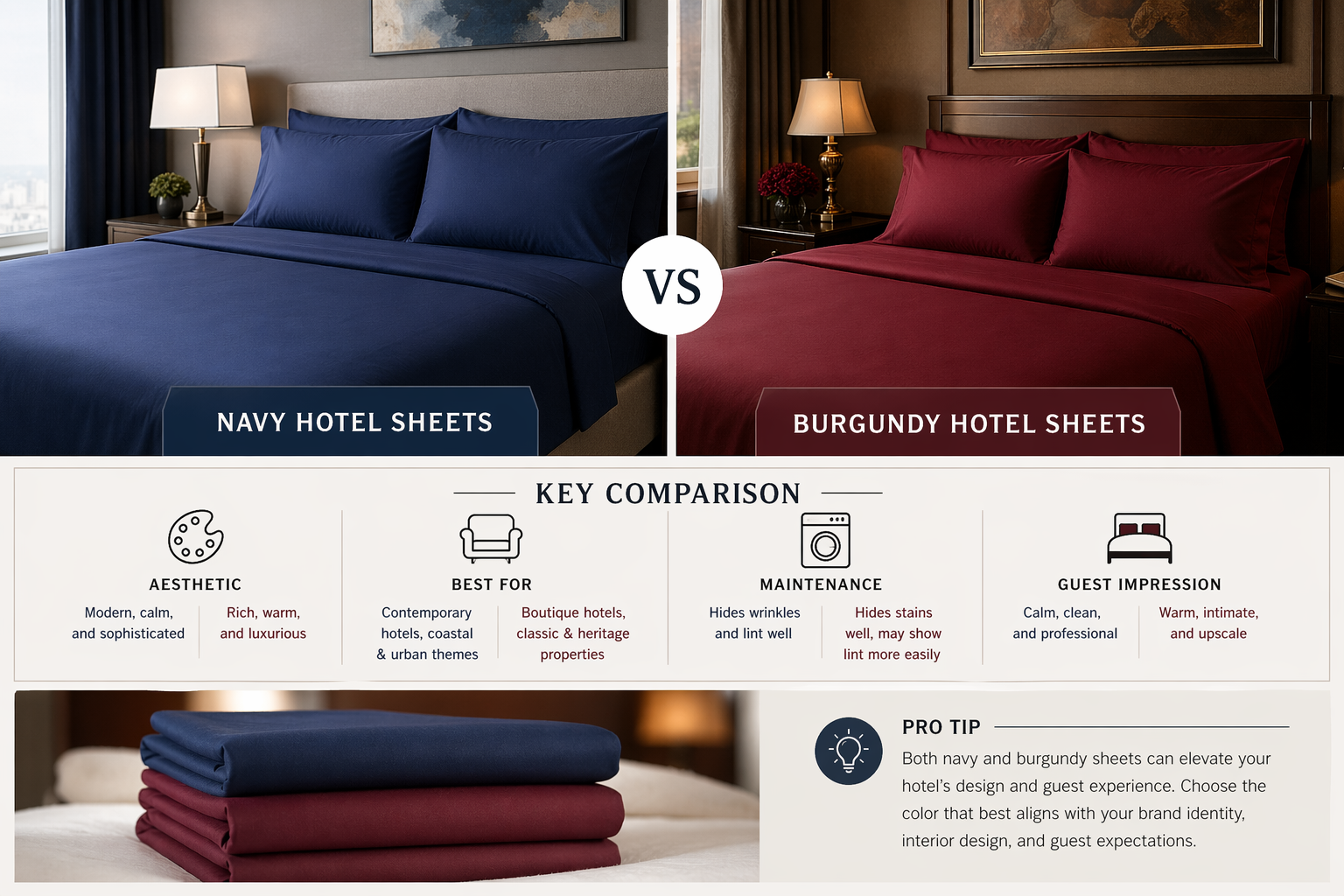
Navy vs Burgundy Hotel Sheets: Side-by-Side Comparison
Choosing between navy and burgundy bedding ultimately comes down to design goals and operational priorities. The following comparison highlights the key differences.
|
Factor |
Navy Sheets |
Burgundy Sheets |
|
Style |
Modern and minimalist |
Classic and luxurious |
|
Best for |
Urban hotels and contemporary interiors |
Boutique and heritage properties |
|
Guest perception |
Calm and professional |
Warm and upscale |
|
Maintenance |
Hides wrinkles and lint well |
Conceals darker stains |
|
Design flexibility |
Works with modern décor |
Best with traditional interiors |
Both colors can enhance room aesthetics when paired with high-quality hospitality linens.
Fabric Matters: Choosing the Right Material for Colored Sheets
While color plays a major role in room design, fabric quality is even more important for long-term durability and guest comfort.
Hotels typically choose among three primary materials.
Microfiber
Microfiber sheets are widely used in hospitality environments due to their practical benefits.
Advantages include:
-
Excellent stain resistance
-
Wrinkle-resistant finish
-
Affordable price point
-
Quick drying during laundering
Microfiber fabrics also hold color well, making them a strong option for dark-colored hotel sheets.
Sateen
Sateen sheets provide a luxurious, silky feel that many premium hotels prefer.
Key characteristics include:
-
Smooth texture
-
Elegant sheen
-
High-end guest perception
Sateen fabrics can elevate the visual appeal of navy or burgundy bedding, especially in luxury suites or boutique properties.
Cotton Blends
Cotton blends offer a balance between comfort and durability.
Benefits include:
-
Breathability for improved sleep quality
-
Strong resistance to wear
-
Familiar feel preferred by many guests
For colored sheets, choosing fabrics with advanced colorfast technology ensures long-lasting vibrancy even after frequent commercial laundering.
How Bedding Color Influences Guest Satisfaction
In hotel design, the bed is often the visual centerpiece of the room. As a result, bedding color can influence both first impressions and overall guest satisfaction.
Several factors come into play.
Visual Comfort
Darker tones like navy and burgundy create contrast against neutral room elements, making the bed stand out as a focal point.
Emotional Atmosphere
Colors subtly shape emotional responses:
-
Navy promotes calmness and relaxation
-
Burgundy evokes warmth and sophistication
Both tones can enhance the guest experience when aligned with the hotel’s brand identity.
Brand Recognition
Hotels increasingly use design elements to build memorable brand experiences. Unique bedding colors help differentiate properties from competitors that rely solely on traditional white linens.
Maintenance and Laundry Considerations for Dark Hotel Sheets
Hotels choosing darker bedding should adopt laundry practices designed to preserve color and fabric integrity.
Key recommendations include:
Separate Washing Loads
Dark linens should be washed separately to prevent color transfer.
Avoid Chlorine Bleach
Unlike white sheets, colored fabrics require oxygen-based cleaning agents rather than chlorine bleach.
Use Color-Safe Detergents
Hospitality-grade detergents designed for dark fabrics help maintain vibrant colors over time.
Optimize Rinse Cycles
Thorough rinsing reduces detergent residue, which can otherwise appear more noticeable on dark sheets.
By following these practices, hotels can maintain the professional appearance of navy or burgundy bedding even with frequent laundering.
When Hotels Should Choose Navy vs Burgundy Sheets
Selecting the right bedding color should align with the property’s design concept and guest demographics.
Hotels may prefer navy sheets if their property features:
-
Contemporary architecture
-
Minimalist interior design
-
Business-focused clientele
-
Coastal or urban themes
Navy complements modern aesthetics while maintaining a polished, professional atmosphere.
Hotels may prefer burgundy sheets if their property emphasizes:
-
Boutique or heritage design
-
Romantic or intimate ambiance
-
Luxury guest experiences
-
Warm interior palettes
Burgundy adds depth and character, making it ideal for properties focused on storytelling and atmosphere.
Some hotels combine the best of both approaches by using white base sheets with navy or burgundy duvet covers and decorative accents.
Final Verdict: Which Color Is Better?
There is no universal answer to the navy versus burgundy bedding debate. Both colors offer unique advantages and can elevate the guest experience when used thoughtfully.
Navy sheets excel in modern, minimalist environments, providing a calm and contemporary aesthetic. Burgundy sheets shine in luxury and boutique settings, delivering warmth and classic elegance.
Ultimately, the best choice depends on how well the bedding color supports the hotel’s brand identity, interior design vision, and operational requirements.
For hospitality professionals, bedding should never be viewed as a simple utility item. It is a key element of the guest experience, influencing comfort, aesthetics, and overall perception of the property.
By choosing high-quality linens designed specifically for commercial hospitality use, hotels can ensure that whichever color they select—navy or burgundy—enhances both guest satisfaction and long-term operational efficiency.
Frequently Asked Questions
1. Do hotels use colored sheets like navy or burgundy?
Yes. While white is standard, boutique and lifestyle hotels increasingly use navy, burgundy, and other dark tones to enhance branding and guest experience.
2. Are navy hotel sheets better than burgundy sheets?
Neither is universally better. Navy is preferred for modern and minimalist hotels, while burgundy is better suited for luxury and boutique interiors.
3. Do dark hotel sheets affect guest perception?
Yes. Studies show bedding color can influence up to 60% of guest emotional response to room ambiance, especially in boutique hotels.
4. Are navy or burgundy sheets harder to maintain?
Both require color-safe laundering. However, high-quality microfiber or sateen fabrics significantly reduce fading and wear in commercial washing cycles.
5. What type of hotel benefits most from navy sheets?
Urban hotels, business hotels, and coastal resorts benefit most due to the clean, modern, and calming aesthetic.
6. What type of hotel benefits most from burgundy sheets?
Boutique hotels, heritage properties, and luxury suites benefit most due to the warm and premium visual identity.
7. Do colored hotel sheets increase guest satisfaction?
Yes. Industry reports suggest that upgraded room aesthetics, including bedding color, can improve guest satisfaction scores by 10%–15%.
8. What is the best fabric for colored hotel sheets?
Microfiber and sateen are preferred because they offer strong color retention, durability, and commercial laundering resistance.


