


How Colored Hotel Linens Reduce Costs: A Strategic Guide for Hospitality & Healthcare Purchasing Managers
For purchasing managers in hotels and healthcare facilities, linen procurement is no longer just a routine operational decision—it is a cost-control strategy that directly impacts profitability, housekeeping efficiency, and long-term asset performance.
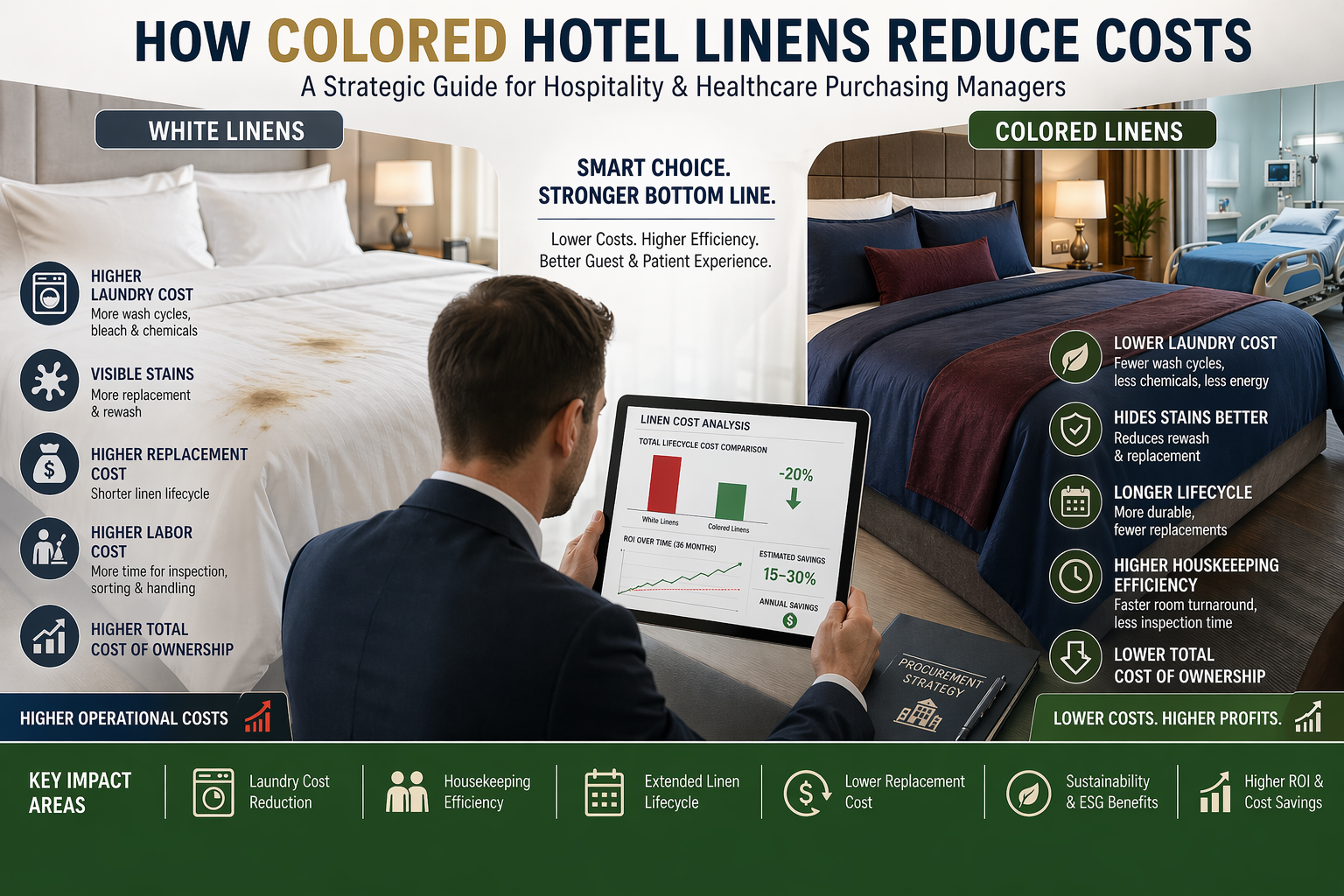
While white linens have traditionally been the industry standard, a growing number of operators are shifting toward colored hotel linens as a structured cost-reduction strategy. This shift is driven by measurable improvements in linen durability, laundry efficiency, replacement cycles, and operational savings.
This guide breaks down exactly how colored hotel linens reduce costs across the full operational lifecycle, supported by procurement, housekeeping, and textile management perspectives.
Table of Contents
How Colored Hotel Linens Reduce Costs
1. Hotel Linen Cost Structure: Where Expenses Actually Come From
2. Colored Hotel Linens vs White: Cost Impact Comparison
3. How Colored Hotel Linens Reduce Laundry Costs
4. Hotel Linen Types Comparison (White vs Colored vs Patterned)
5. Housekeeping Efficiency and Labor Cost Reduction
6. Linen Durability and Replacement Cycle Extension
7. Stain Resistance and Reduced Replacement Cost
8. Hotel Bedding ROI: Financial Perspective for Procurement Managers
9. Bulk Procurement Advantage and Supplier Strategy
10. Operational Efficiency Beyond Laundry and Housekeeping
11. Sustainability and ESG Cost Benefits
12. Hotel Linen Economics: Total Lifecycle Cost Model
13. Strategic Decision Framework for Purchasing Managers
14. Common Misconceptions About Colored Hotel Linens
15. Strategic Use Cases: Hotels and Healthcare Facilities
16. Final Conclusion: Why Colored Hotel Linens Reduce Costs
17. FAQ: How Colored Hotel Linens Reduce Costs
1. Hotel Linen Cost Structure: Where Expenses Actually Come From
To understand how colored hotel linens reduce cost, it is essential to first break down hotel linens cost drivers.
Key cost components include:
-
Hotel laundry cost (water, detergent, energy)
-
Linen replacement cost due to wear and staining
-
Housekeeping cost (labor + time per room turnover)
-
Hotel supply cost (procurement + logistics)
-
Hotel textile cost (fabric quality + durability)
-
Operational inefficiencies in linen handling
From a procurement standpoint, most managers focus only on purchase price. However, hotel bedding savings are largely driven by lifecycle efficiency—not upfront cost.
This is where colored hotel linens vs white linens creates a significant operational difference.
2. Colored Hotel Linens vs White: Cost Impact Comparison
One of the most searched procurement questions is:
“cost impact of colored vs white hotel linens”
Traditionally, white linens dominate hospitality due to cleanliness perception. However, they come with hidden costs:
-
Faster visible staining
-
Higher replacement frequency
-
More aggressive laundering requirements
-
Increased chemical and bleach usage
In contrast, colored hotel sheets offer:
-
Better stain concealment
-
Reduced perceived soiling
-
Longer usable lifecycle
-
Lower wash intensity requirements
Key Insight:
Hotel fabric cost is not just purchase price—it is replacement frequency multiplied by laundering intensity.
3. How Colored Hotel Linens Reduce Laundry Costs
One of the most impactful areas of savings is hotel laundry cost reduction.
How it works:
Colored linens:
-
Reduce visible staining → fewer rewashes
-
Require less bleaching → lower chemical cost
-
Allow optimized wash cycles → reduced energy usage
This directly improves:
-
hotel laundry savings
-
hotel laundry expense control
-
hotel laundry management efficiency
For large hotels, even a 10–15% reduction in wash cycles translates into significant annual savings.
Hotel Linen Types Comparison: White vs Colored vs Patterned (Cost & Operations)
|
Factor |
White Linens |
Colored Linens |
Patterned Linens |
|
Initial Purchase Cost |
Medium |
Medium–Slightly Higher (varies by dyeing) |
Medium–High |
|
Linen Replacement Cost |
High (stains visible early) |
Low–Medium (better stain concealment) |
Low–Medium (hides wear well) |
|
Laundry Cost |
High (frequent rewashing + bleaching) |
Medium–Low (fewer rewashes, less chemical use) |
Medium (depends on pattern complexity) |
|
Stain Visibility |
Very High |
Low |
Very Low |
|
Housekeeping Efficiency |
Standard |
High (faster room turnover) |
High |
|
Perceived Cleanliness (Guest View) |
Very High |
High (modern/boutique feel) |
High (premium aesthetic) |
|
Durability Perception |
Medium |
High |
High |
|
Branding Flexibility |
Low |
High |
Very High |
|
Hotel Linen Lifecycle Cost |
High |
Low |
Medium |
|
Best Use Case |
Luxury hotels, traditional setups |
Boutique hotels, cost-focused operations |
Resorts, themed properties, lifestyle hotels |
Need Reliable Wholesale Supplies for Your Facility?
Hotels, healthcare facilities, restaurants, and commercial operations across Canada trust Linen Plus for consistent bulk supply and commercial-grade quality.

Bulk Wholesale Pricing
Competitive pricing for large-volume procurement.

Reliable Nationwide Supply
Consistent inventory and fast shipping across Canada.

Hospitality & Healthcare Grade
Products designed for demanding commercial environments.
4. Housekeeping Efficiency and Labor Cost Reduction
Another major cost driver is housekeeping cost, especially in high-turnover properties.
Keyword insight:
-
reduce housekeeping costs with colored bedding
-
housekeeping efficiency improvement with colored linens
Colored linens help by:
-
Reducing stain inspection time per room
-
Simplifying sorting (especially in color-coded systems)
-
Reducing linen rejection rates
-
Speeding up room turnover
This improves:
-
hotel housekeeping workflow
-
hotel room turnover cost
-
hotel cost per room
Operational impact:
Faster room readiness → more available inventory for booking → higher revenue potential per room.
5. Linen Durability and Replacement Cycle Extension
A major driver of hotel linen economics is replacement frequency.
Key question:
Do colored linens last longer in hotels?
In many cases, yes.
Colored linens often:
-
Reduce visible aging
-
Minimize aggressive bleaching
-
Lower fiber degradation from harsh chemicals
This improves:
-
linen durability
-
hotel linen replacement cycle
-
hotel bedding replacement savings
Result:
Fewer annual purchases → improved hotel textile ROI
6. Stain Resistance and Reduced Replacement Cost
One of the most important operational advantages is stain concealment.
Relevant keywords:
-
stain resistant linens
-
hotel stain control
-
hotel linen stain hiding
Colored fabrics:
-
Mask minor stains
-
Reduce immediate discard decisions
-
Extend usable lifecycle of damaged linens
This leads to:
-
Lower linen replacement cost
-
Reduced hotel textile replacement savings
-
Improved hotel linen expense reduction
7. Hotel Bedding ROI: Financial Perspective for Procurement Managers
From a procurement standpoint, the key decision metric is:
Hotel bedding ROI (Return on Investment)
Colored linens improve ROI through:
-
Lower replacement cycles
-
Reduced laundry cost
-
Lower labor requirements
-
Improved asset utilization
KPI improvement:
-
Lower hotel cost per stay
-
Reduced hotel bedding procurement cost
-
Improved hotel textile ROI
8. Bulk Procurement Advantage and Supplier Strategy
Another major factor is hospitality procurement efficiency.
Relevant keywords:
-
bulk hotel linens
-
hotel bedding suppliers
-
hotel linen sourcing strategy
Colored linens often provide:
-
Better bulk pricing options
-
Reduced SKU complexity
-
Simplified inventory management
This reduces:
-
hotel supply cost
-
hotel textile procurement cost
-
supply chain inefficiencies
9. Operational Efficiency: Beyond Laundry and Housekeeping
Colored linens also influence broader operational systems:
-
hotel textile management
-
hotel linen optimization
-
hotel housekeeping linen system
Benefits include:
-
Faster room standardization
-
Reduced sorting errors
-
Improved linen tracking systems
Workflow impact:
Improved operational flow → reduced bottlenecks in housekeeping and laundry departments.
10. Sustainability and ESG Cost Benefits
Sustainability is now a procurement KPI in both hospitality and healthcare sectors.
Relevant keywords:
-
sustainable linens
-
eco hotel linens
-
hotel fabric sustainability cost
Colored linens contribute by:
-
Reducing water usage (fewer rewashes)
-
Lowering chemical consumption
-
Extending product lifecycle
This supports:
-
ESG compliance goals
-
Lower operational cost per room
-
Reduced environmental footprint
11. Hotel Linen Economics: Total Lifecycle Cost Model
Understanding hotel linen economics requires shifting from purchase cost to lifecycle cost.
Lifecycle cost includes:
-
Purchase price
-
Laundry cycles
-
Labor cost
-
Replacement frequency
-
Disposal/replacement logistics
Key insight:
Colored linens often outperform white linens in total lifecycle cost—even if initial purchase price is similar or slightly higher.
12. Strategic Decision Framework for Purchasing Managers
When evaluating colored linens, procurement managers should assess:
Cost metrics:
-
Hotel linen pricing comparison
-
Hotel bedding cost analysis
-
Hotel textile cost management
Operational metrics:
-
Housekeeping productivity
-
Laundry cycle efficiency
-
Room turnover speed
Asset metrics:
-
Linen replacement cycle
-
Fabric durability
-
ROI per linen unit
13. Common Misconceptions About Colored Hotel Linens
Misconception 1: White linens are always more hygienic
Reality: Hygiene depends on laundering standards, not color.
Misconception 2: Colored linens increase replacement cost
Reality: They often reduce replacement frequency.
Misconception 3: Guests prefer only white linens
Reality: Boutique and modern hotels increasingly use colored linens for branding and differentiation.
14. Strategic Use Cases: Hotels and Healthcare Facilities
Hospitality:
-
Boutique hotels
-
Resorts
-
Extended stay properties
-
Eco-conscious hotels
Healthcare:
-
Clinics
-
Dental facilities
-
Recovery centers
In both sectors, colored linens support:
-
Cost control
-
Operational efficiency
-
Standardization of textile systems
15. Final Conclusion: Why Colored Hotel Linens Reduce Costs
Colored hotel linens reduce costs not through a single factor, but through a combined operational impact:
-
Lower laundry frequency
-
Reduced housekeeping labor
-
Extended linen lifecycle
-
Lower replacement rates
-
Improved procurement efficiency
-
Better inventory control
Final takeaway for purchasing managers:
The real value of colored hotel linens is not in the fabric itself—but in the operational efficiency it unlocks across the entire hospitality system.
FAQ: How Colored Hotel Linens Reduce Costs
1. Do colored hotel linens really reduce operational costs?
Yes. Colored hotel linens reduce costs primarily through:
-
fewer rewashes due to stain concealment
-
reduced linen replacement frequency
-
lower chemical and bleaching usage
-
improved housekeeping speed
This directly lowers hotel laundry cost and housekeeping cost.
2. Are colored linens cheaper than white linens in the long run?
While initial prices may be similar, colored linens are often cheaper over time due to:
-
extended linen replacement cycles
-
reduced hotel textile maintenance cost
-
improved hotel bedding ROI
Long-term lifecycle savings typically outweigh upfront differences.
3. How do colored linens reduce laundry expenses?
Colored linens help reduce hotel laundry cost by:
-
minimizing visible stains (fewer emergency rewashes)
-
reducing need for strong bleaching agents
-
allowing optimized wash cycles
This leads to lower water, detergent, and energy consumption.
4. Do colored linens affect guest satisfaction?
No negative impact when properly selected. In fact:
-
Boutique hotels often report improved aesthetics
-
Guests associate modern colors with premium branding
-
Cleanliness perception remains high if laundering standards are strong
5. What is better for hotels: white or colored linens?
It depends on strategy:
-
White linens → luxury positioning, high maintenance
-
Colored linens → cost efficiency, operational optimization
Most procurement managers prefer colored linens for cost control and durability advantages.
6. Do colored linens last longer than white linens?
In many cases, yes. Colored linens:
-
avoid harsh bleaching exposure
-
hide minor wear and stains
-
reduce disposal rate
This improves linen durability and lifecycle value.
7. Are colored linens suitable for healthcare environments?
Yes, but with proper fabric standards. Healthcare facilities use colored linens to:
-
improve workflow efficiency
-
reduce sorting errors
-
manage cost per cycle
However, hygiene compliance standards must always be maintained.
8. How do colored linens help with housekeeping efficiency?
They improve housekeeping workflow by:
-
reducing time spent inspecting stains
-
simplifying sorting systems (color-coded linen systems)
-
increasing room turnover speed
This directly reduces hotel housekeeping cost.
9. Do colored linens support sustainability goals?
Yes. They contribute to:
-
fewer wash cycles → lower water usage
-
reduced chemical consumption
-
longer lifecycle → less textile waste
This supports ESG and sustainable hotel operations.
10. What is the biggest cost advantage of colored hotel linens?
The biggest advantage is total lifecycle cost reduction, driven by:
-
lower replacement frequency
-
reduced laundry intensity
-
improved operational efficiency
This makes them a strong choice for hotel cost optimization strategies.


