


Waking up with a stiff neck, throbbing upper back, or tingling arms is rarely caused by "sleeping wrong." It is almost always a structural clearance issue.
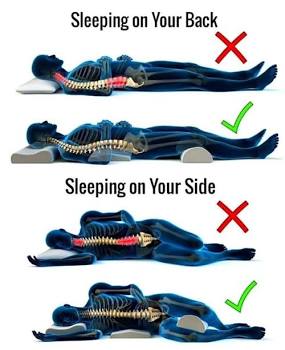
When you sleep on your side, your neck hangs across a 4- to 6-inch drop between the side of your head and the point where your shoulder hits the mattress. If your pillow fails to span this gap, your cervical spine flexes laterally. Muscles like the levator scapulae and trapezius remain contracted all night to hold your head in place, causing acute pain and chronic stiffness by morning.
The Biomechanics of Side-Sleeping Neck Pain
To fix neck pain, stop viewing a pillow as a soft cushion and start treating it as an ergonomic support block.
       [ Head ]
          |  <--- 4" to 6" Shoulder Gap
   +--------------+
   | Pillow Loft  |
   +--------------+
======[ Mattress ]======
When you lie on your side, three distinct forces act on your cervical spine:
- Lateral Spinal Flexion (The Sag): If your pillow is too soft or low, your head tilts down toward the mattress. This compresses the nerve roots on the lower side of your neck and strains muscles on the upper side.
- Reverse Flexion (The Perch): If your pillow is too high or firm, your head is propped up at an unnatural upward angle. This jams the facet joints in your upper cervical vertebrae (C1–C4).
- Rotational Torque (The Twist): If a pillow lacks proper contouring, your head rolls forward or backward, twisting your neck out of alignment with your thoracic spine.
Wake-Up Symptom Diagnostic
Your morning pain tells you exactly what is wrong with your current pillow setup:
Need Reliable Wholesale Supplies for Your Facility?
Hotels, healthcare facilities, restaurants, and commercial operations across Canada trust Linen Plus for consistent bulk supply and commercial-grade quality.

Bulk Wholesale Pricing
Competitive pricing for large-volume procurement.

Reliable Nationwide Supply
Consistent inventory and fast shipping across Canada.

Hospitality & Healthcare Grade
Products designed for demanding commercial environments.
| Morning Symptom | Root Cause | Pillow Fix |
|---|---|---|
| Stiff neck side muscle pain | Loft is too low; head sags overnight | Increase loft with extra shredded foam or a thicker core |
| Pinching at base of skull | Loft is too high; head is propped up | Lower the fill or switch to a lower profile |
| Shoulder numbness / Tingling arm | Mattress is too firm or pillow lacks shoulder cutout | Use a contoured cutout pillow and add a knee support |
| Mid-back & Hip soreness | Lower body rotated out of alignment | Place a firm pillow between knees to stabilize the pelvic gate |
Key Features to Evaluate Before Buying
1. Pillow Loft (Height)
- Low Loft (< 3 inches): Generally unsafe for side sleepers unless paired with broad shoulders on an extremely plush mattress.
- Medium Loft (3 to 5 inches): Ideal for small-to-average frame side sleepers (under 170 lbs).
- High Loft (5+ inches): Crucial for broad-shouldered individuals (over 170 lbs) sleeping on medium-firm to firm mattresses.
2. Mattress Interaction (The Pillow-Mattress Dyad)
Your pillow choice depends heavily on your mattress firmness:
- Plush Mattress: Your shoulder sinks 1–2 inches into the bed. You need a medium-low loft (3.5–4.5").
- Firm Mattress: Your shoulder stays elevated on top of the surface. You need a high loft (5–6.5") to fill the remaining gap.
3. Material Properties
- Shredded Memory Foam: Highly customizable. You can unzip the inner liner to add or remove fill until your spine sits parallel to the mattress. Excellent air ventilation compared to solid block foam.
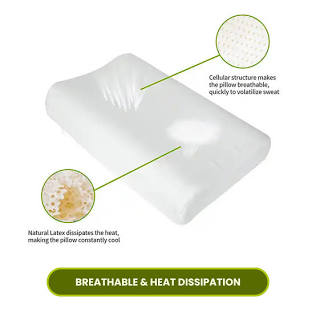
- Contoured Talalay Latex: Offers immediate response and gentle push-back support without sinking over time. Naturally hypoallergenic and cool.
- Solid Block Memory Foam: Best for consistent pressure relief, though it can trap heat and harden in cold rooms.
- Down & Polyester Microfiber: Avoid these for severe neck pain. Down compresses under weight within 30 minutes, leaving your neck unsupported.

Top Recommended Pillows for Side Sleepers
Coop Home Goods Premium Adjustable Pillow
Why It Works: The biggest challenge in buying a pillow online is guessing the correct loft height. The Coop Home Goods pillow solves this by shipping with an extra bag of fill. You can add or remove foam memory blend until your cervical spine sits parallel to the bed. The cover uses LAVAux bamboo fabric for temperature control.
Eli & Elm Cotton Side Sleeper Pillow
Why It Works: Features a U-shape shoulder cutout that cradles the shoulder joint while supporting the neck curve. This design eliminates shoulder bunching and stops you from tucking your arm under your pillow—a habit that causes shoulder nerve compression.
Tempur-Pedic TEMPUR-Neck Pillow
Why It Works: Molded directly to support the natural curve of your head, neck, and shoulders. The dual-lobe shape features a higher ridge along the neck edge and a shallow recess for the head, locking your cervical spine in neutral alignment throughout the night.
Step-by-Step: Measuring Your Shoulder-to-Neck Clearance (SNC)
Instead of guessing your loft height, measure your body clearance at home before making a purchase:
- Position yourself: Stand straight with your shoulder flush against a flat wall.
- Maintain alignment: Keep your head upright in a neutral gaze (do not tilt sideways).
- Measure the gap: Use a soft tape measure to calculate the distance from the side of your neck to the outer edge of your shoulder bone (acromion process).
- Adjust for mattress sinkage: Subtract 0.5 inches if you sleep on a plush mattress (accounting for shoulder sinkage), or keep the raw measurement if sleeping on a firm mattress.
How to Set Up Your Bed for Full Spinal Support
Correcting your neck alignment requires stabilizing your lower spine as well:
- Head & Neck: Position your primary pillow directly under your head and neck, allowing your shoulder to rest flush against the bottom edge—not resting on top of the pillow itself.
- Knee Elevation: Place a contoured firm pillow between your knees. This prevents your upper leg from sliding forward, which twists your lumbar spine and pulls on your neck muscles.
- Arm Support: Avoid placing your arm under your head or pillow. Hug a small body pillow or cushion in front of your chest to keep your shoulders stacked and prevent rotator cuff strain.
Essential Sleep Setup Essentials
To build a fully supportive sleep environment, consider upgrading your complete bed setup with high-quality linens and protective bedding accessories:


