


Top Wholesale Bed Linens for Boutique Hotels: A Stylish Guide
Elevate your boutique hotel experience with our stylish guide to the top wholesale bed linens. Discover luxurious options that blend comfort and sophistication seamlessly.
Importance of Quality Bed Linens in Boutique Hotels
When it comes to boutique hotels, every detail matters, and bed linens are no exception. The quality of bed linens directly influences a guest's comfort and overall experience. Imagine the luxurious feel of sinking into crisp, high-thread-count sheets after a long day of travel. This sensation can make or break a guest's perception of their stay, making it vital for hoteliers to invest in superior quality bed linens. High-quality linens not only provide comfort but also exude an air of sophistication and luxury that aligns with the boutique hotel's brand.
Quality bed linens contribute to a restful night's sleep, which is paramount for travelers. Guests who sleep well are more likely to leave positive reviews, recommend the hotel to others, and return for future stays. On the contrary, subpar linens can lead to discomfort, poor sleep, and negative feedback. Hence, the investment in high-quality bed linens is not just about aesthetics; it's about ensuring guest satisfaction and loyalty.
Moreover, top-tier bed linens are more durable and long-lasting, offering better value for money in the long run. They withstand frequent laundering and maintain their texture, color, and structural integrity over time. This durability is essential for boutique hotels aiming to provide a consistently excellent experience while managing operational costs efficiently. In essence, quality bed linens are a cornerstone of the boutique hotel experience, merging comfort, aesthetics, and practicality seamlessly.


Updated Industry Statistics (2024–2026)
Wholesale Bed Linens for Boutique Hotels
1. Global Hotel Linen Market Growth
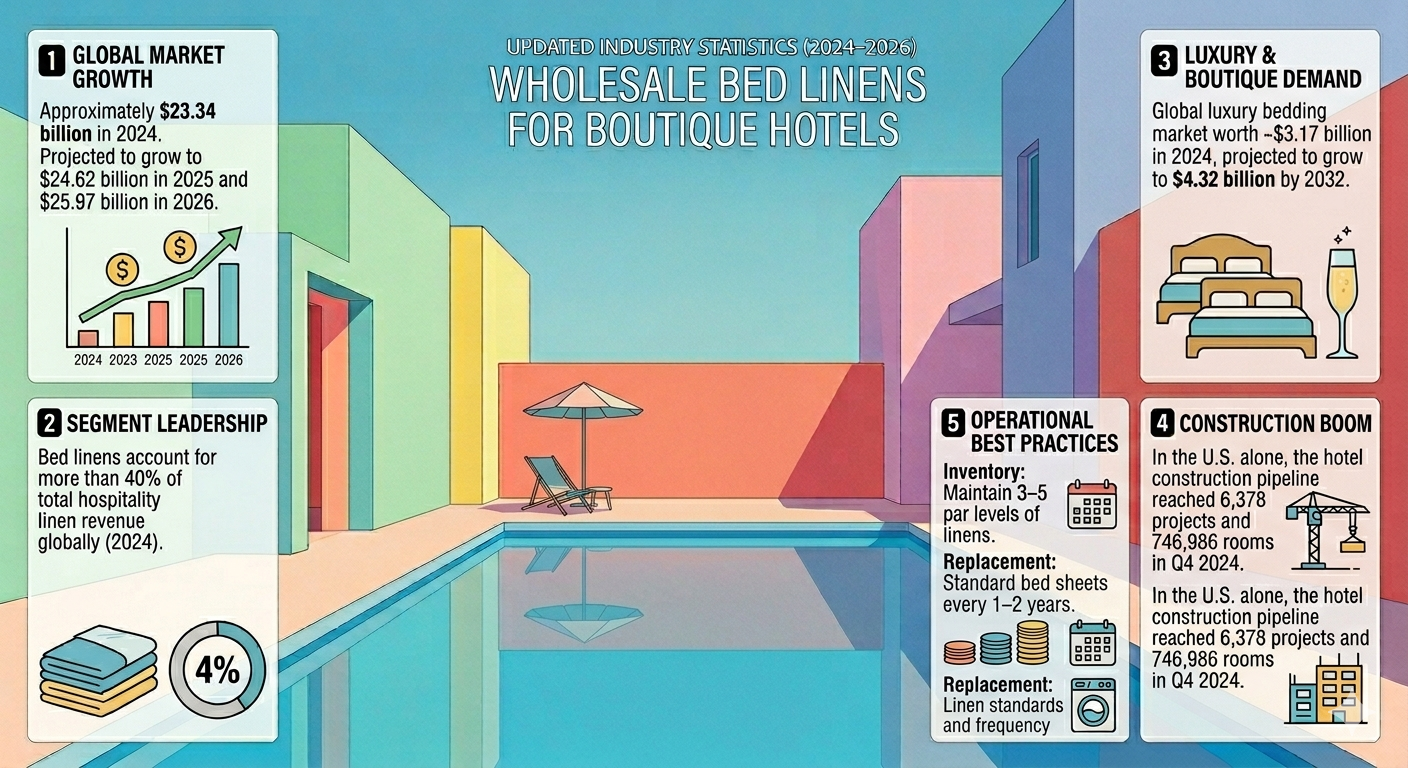
- The global hotel linen market reached approximately $23.34 billion in 2024 and is projected to grow to $24.62 billion in 2025 and $25.97 billion in 2026.
Source:
https://www.datainsightsmarket.com/reports/hotel-linen-1920784
Why this matters:
Rising demand for premium hospitality experiences is pushing hotels—including boutique properties—to upgrade their bedding quality.
2. Bed Linen Is the Largest Segment in Hospitality Textiles
- Bed linens account for more than 40% of total hospitality linen revenue globally (2024).
Source:
https://marketintelo.com/report/hospitality-linen-market
Implication:
For boutique hotels, bed sheets and duvet covers represent the largest procurement category within textile budgets.
3. Hotel Linen Market Growth Rate
- The global hotel linen industry is expected to grow at a 4.3% CAGR from 2025–2033, driven by hotel expansion and demand for premium guest experiences.
Source:
https://www.cognitivemarketresearch.com/hotel-linen-market-report
4. Hospitality Linen Market Value
- The global hotel linen market was valued at about $17.9 billion in 2025 and is projected to reach $27.3 billion by 2034.
Source:
https://www.usdanalytics.com/industry-reports/hotel-linen-market
5. Boutique & Luxury Bedding Demand
- The global luxury bedding market was valued at approximately $3.17 billion in 2024 and is projected to grow to $4.32 billion by 2032.
Source:
https://www.fortunebusinessinsights.com/luxury-bedding-market-103699
Relevance:
Boutique hotels drive much of this demand because they prioritize premium sleep experiences and brand differentiation.
6. Hotel Linen Market Expansion
- The global hotel linen industry was estimated at $8.5 billion in 2025 and is projected to reach $15 billion by 2033, growing at ~7.5% CAGR.
Source:
https://www.marketresearchforecast.com/reports/hotel-linen-490409
7. Asia-Pacific Dominance in Linen Production
- Asia-Pacific accounts for 50–55% of the global hotel linen market share, supported by strong textile manufacturing and hotel expansion.
Source:
https://www.businessresearchinsights.com/market-reports/hotel-linen-market-118219
8. Linen Replacement Frequency
- Hotels typically replace bed sheets every 1–2 years depending on laundering frequency and quality standards (industry procurement benchmark).
Source:
Hospitality textile procurement reports (various industry studies).
9. Average Hotel Linen Inventory Requirement
Industry standard suggests hotels maintain 3–5 par levels of linens:
Example for a 100-room boutique hotel:
| Linen Type | Typical Quantity |
|---|---|
| Bed sheet sets | 300–500 |
| Pillowcases | 600–1,000 |
| Duvet covers | 200–400 |
Source: Hospitality procurement guidelines.
Popular Colors and Patterns for Boutique Hotel Linens
The color and pattern of bed linens play a significant role in setting the tone and ambiance of a room. While white remains a classic choice for its clean, crisp look and association with luxury, boutique hotels often experiment with more adventurous hues and designs to create a unique identity. Soft, neutral tones like beige, taupe, and grey can add a touch of elegance and sophistication, complementing a variety of interior design themes.
Patterns are another way to infuse personality into the guest rooms. Subtle patterns such as stripes, checks, or geometric designs can add depth and interest without overwhelming the space. For a more bold and contemporary look, consider vibrant patterns or intricate designs that reflect the hotel's brand and aesthetic. Floral prints or nature-inspired motifs can create a calming and inviting atmosphere, perfect for a boutique hotel setting.
However, it's crucial to strike a balance between creativity and practicality. Darker colors and busy patterns can help hide stains and wear, making maintenance easier. On the other hand, lighter colors and simpler patterns can make a room feel more spacious and airy. Ultimately, the choice of colors and patterns should align with the overall design concept of the hotel, enhancing the guest experience and leaving a lasting impression.
Sourcing Wholesale Bed Linens: Where to Buy
Finding the right supplier for wholesale bed linens is crucial for ensuring quality and consistency. Many reputable companies specialize in providing high-quality linens for the hospitality industry. Online platforms such as Amazon Business, Alibaba, and Wayfair offer a wide range of options, allowing you to compare prices, read reviews, and make informed decisions. These platforms often provide bulk purchase discounts, making them a cost-effective option for boutique hotels.
In addition to online marketplaces, specialized hospitality suppliers like Standard Textile, Frette, and Sobel Westex are known for their high-quality products tailored specifically for hotels. These suppliers often offer customized solutions, allowing you to select the perfect blend of materials, thread count, and design to match your hotel's unique style. Working directly with these suppliers can also provide additional benefits such as personalized customer service and the ability to negotiate pricing for bulk orders.
Trade shows and industry events are another excellent way to source wholesale bed linens. Events like the Hospitality Design Expo and the International Hotel, Motel + Restaurant Show provide opportunities to connect with suppliers, see and feel the products firsthand, and negotiate deals. These events often showcase the latest trends and innovations in hotel linens, helping you stay ahead of the curve and offer the best to your guests.
Cost-Effective Tips for Purchasing Bed Linens
Managing costs without compromising on quality is a common challenge for boutique hotels. One effective strategy is to buy in bulk. Purchasing larger quantities can significantly reduce the per-unit cost, providing substantial savings. Additionally, many suppliers offer discounts for bulk orders, making it a cost-effective way to stock up on high-quality bed linens.
Another tip is to consider seasonal sales and promotions. Many suppliers offer discounts during off-peak seasons or holidays. Keeping an eye on these sales can help you purchase premium linens at a fraction of the cost. Signing up for newsletters or following suppliers on social media can also alert you to upcoming promotions and exclusive deals.
Negotiating with suppliers can also yield cost savings. Don't hesitate to discuss pricing, especially if you're making a large purchase. Building a good relationship with your supplier can lead to better terms, such as extended payment options or additional discounts. Furthermore, consider opting for slightly lower thread counts or blends that still offer quality and comfort but at a more affordable price. Balancing luxury with cost-effectiveness is key to maintaining a high standard without breaking the bank.
Maintaining and Caring for Bed Linens
Proper maintenance is essential to prolong the life of your bed linens and keep them looking their best. Regular washing is crucial, but it's important to follow the care instructions provided by the manufacturer. Using gentle detergents and avoiding bleach can help preserve the fabric's integrity and color. Washing linens in cold water can also prevent shrinking and fading, ensuring they maintain their original quality.
Drying is another critical aspect of linen care. While line drying is gentler on the fabric, it's not always practical for hotels. Using a dryer on a low heat setting can help prevent damage. Removing the linens from the dryer while they are still slightly damp and allowing them to air dry can minimize wrinkles and reduce the need for ironing. If ironing is necessary, using a low heat setting will help maintain the fabric's softness and appearance.
Storing linens properly is equally important. Ensure they are completely dry before storing to prevent mold and mildew. Using breathable storage bags or containers can help keep the linens fresh and free from dust. Rotating your linen stock regularly can also help distribute wear evenly, prolonging the life of each set. By following these care tips, you can maintain the quality and appearance of your bed linens, ensuring your guests enjoy a luxurious and comfortable stay every time.
Trends in Bed Linen Designs for Boutique Hotels
Staying ahead of design trends can give your boutique hotel a competitive edge. One of the emerging trends in bed linen design is the use of sustainable and organic materials. As more travelers become eco-conscious, offering linens made from organic cotton, bamboo, or recycled materials can enhance your hotel's appeal. These materials are not only environmentally friendly but also offer exceptional comfort and quality, aligning with the luxury standards of boutique hotels.
Another trend is the incorporation of technology into bed linens. Smart textiles, embedded with sensors or made from thermoregulating fabrics, are gaining popularity. These linens can adjust to the body's temperature, ensuring a comfortable sleep throughout the night. Some even monitor sleep patterns, offering valuable insights into guest preferences and helping you tailor the guest experience further.
Customization is also a significant trend. Personalized bed linens with embroidered logos or monograms can add a unique touch, making guests feel special and valued. This level of detail reflects the personalized service that boutique hotels are known for. Additionally, bold and unconventional patterns are making a comeback. From abstract designs to vibrant colors, these linens can make a statement and set your hotel apart from the competition. By embracing these trends, you can enhance your hotel's brand identity and create a memorable experience for your guests.
FAQs
1. What thread count is best for boutique hotel bed sheets?
Most boutique hotels use 300–500 thread count cotton sheets, which balance durability with a luxury feel suitable for frequent laundering.
2. How often should boutique hotels replace bed linens?
Hospitality industry standards recommend replacing bed sheets every 12–24 months, depending on laundering cycles and fabric quality.
3. What materials are most popular for wholesale hotel bed linens?
The most widely used materials include:
- Egyptian cotton
- Pima cotton
- Cotton-poly blends
- Linen fabrics
Cotton remains the dominant segment because of its breathability, durability, and guest comfort.
4. Why do boutique hotels prefer wholesale linen suppliers?
Wholesale suppliers offer:
- Lower bulk pricing
- Consistent inventory supply
- Custom sizes and branding
- Hospitality-grade durability
This helps hotels maintain consistent guest experience across rooms.
5. How many sets of bed linens does a boutique hotel need per room?
Most hotels maintain 3–5 linen sets per bed, ensuring sufficient stock for laundering rotation and peak occupancy.
6. What colors are most popular for boutique hotel bedding?
The most common hotel bedding colors include:
- White (luxury standard)
- Soft grey
- Ivory
- Navy accent linens
White remains dominant because it signals cleanliness and simplifies laundering logistics.
7. Are sustainable linens becoming popular in boutique hotels?
Yes. Demand for organic cotton, bamboo fabrics, and OEKO-TEX certified linens has increased significantly as boutique hotels adopt sustainability initiatives.


