


Could a 15% decrease in staff productivity be the hidden cost of your facility's stagnant air? In high-output environments across Canada, choosing the wrong canarm exhaust system isn't just a comfort issue; it's a direct threat to your bottom line through increased energy waste and accelerated equipment wear. You're likely already feeling the pressure of rising operational costs and the technical complexity of maintaining strict indoor air quality standards while trying to source reliable industrial equipment locally.
Finding the right ventilation solution doesn't have to be a technical headache or a logistical hurdle. This guide provides the clarity you need to select the optimal system, ensuring your facility achieves full regulatory compliance plus peak operational efficiency. We'll demystify complex metrics like CFM and static pressure, providing a clear path to improved circulation and significantly reduced long-term maintenance costs. Discover how a one-stop shop for high-performance fans can provide the complete solution your Canadian facility requires for long-term success.
Key Takeaways
- Differentiate between XB belt-driven and XBL direct-drive models to ensure your ventilation choice matches your facility's scale and performance needs.
- Learn to calculate precise CFM and Air Change per Hour (ACH) requirements to maintain regulatory compliance and operational safety in Canadian industrial settings.
- Evaluate the engineering benefits of a canarm exhaust system, including TEAO motors and weather-resistant housings built for harsh commercial environments.
- Streamline your facility management by consolidating industrial ventilation and essential supplies into a single, cost-effective procurement stream with a reliable Canadian partner.
Canarm Exhaust Series: Differentiating XB, XBL, and SD Models
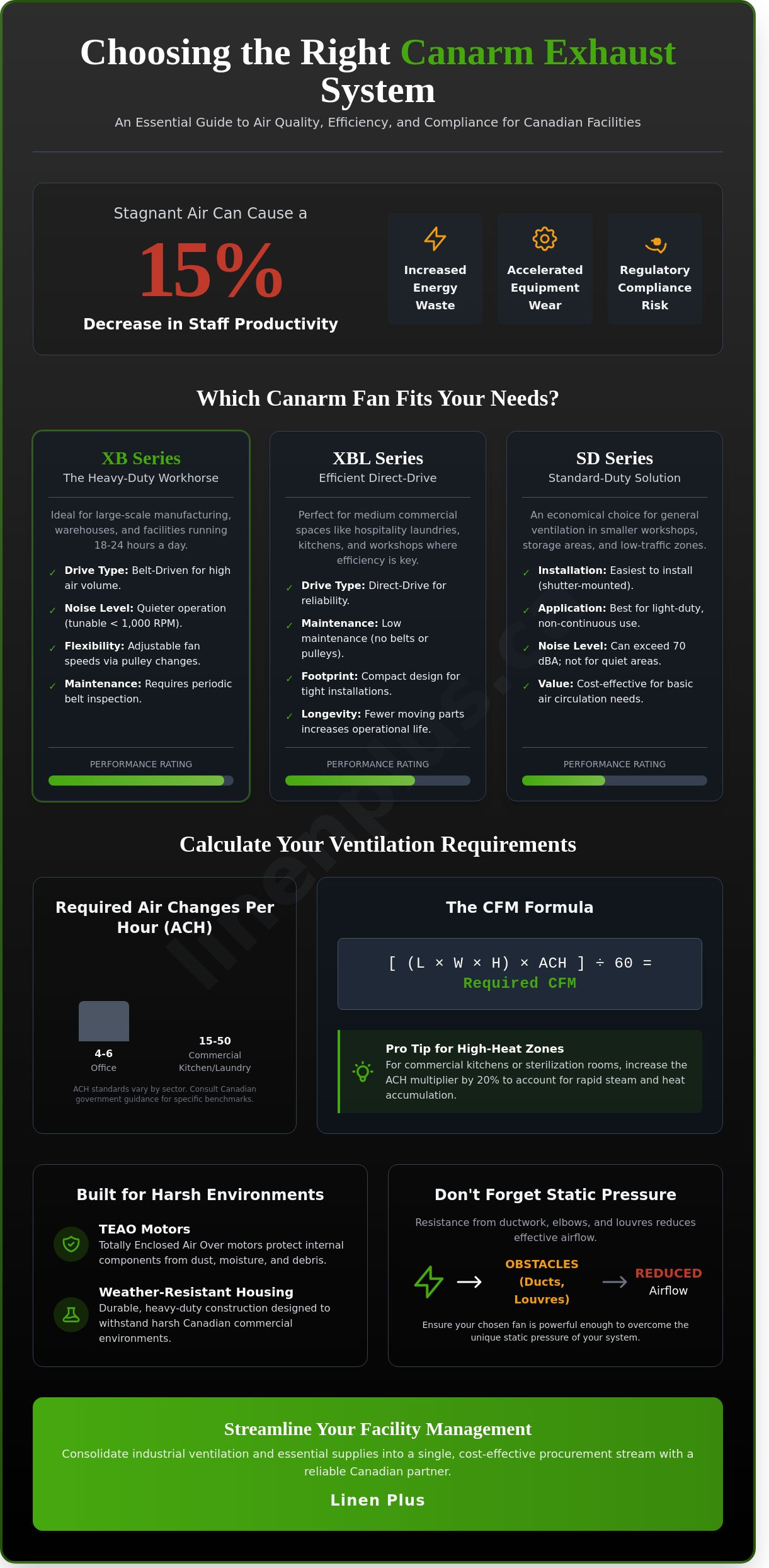
Selecting the right canarm exhaust system depends on your facility's specific cubic feet per minute (CFM) requirements and its daily operational environment. Canadian warehouse managers and facility operators typically choose between three core series: XB, XBL, and SD. Each model is engineered for specific workloads, ranging from light-duty air circulation to continuous industrial extraction.
- XB Series: These are the heavy-duty workhorses of the lineup. They utilize a belt-driven motor, which allows for lower fan speeds and higher air volumes. This design is critical for large-scale manufacturing plants where constant air turnover is required.
- XBL Series: This series provides high-performance direct-drive options. It's an ideal solution for medium commercial spaces, such as laundry rooms in the hospitality sector, where space and efficiency are priorities.
- SD Series: Designed for standard-duty applications, these shutter-mounted fans are common in smaller workshops or storage areas. They offer the easiest installation process for general ventilation needs.
Industrial vs. Standard Duty: Which fits your workload?
Facilities running 18 to 24 hours a day require the heavy-duty motors found in the XB series to prevent premature motor burnout. Noise levels also vary significantly between these models. Standard SD models may produce decibel ratings above 70 dBA, while belt-driven XB models can be tuned to operate at speeds under 1,000 RPM for quieter performance. This is a vital consideration for noise-sensitive environments like medical supplies storage areas. Proper Ventilation (architecture) ensures these noise levels don't disrupt daily operations while maintaining air quality.
Drive Mechanisms and Operational Longevity
Direct-drive fans, such as the XBL series, eliminate the need for belt adjustments or replacements. This reduces long-term maintenance costs for facilities that don't have dedicated on-site technicians. Direct-drive motors are also more compact, making them easier to fit into tight wall spaces. Belt-driven canarm exhaust units offer more flexibility. By changing pulley sizes, operators can adjust fan speeds to meet shifting seasonal air volume needs in large Canadian distribution centers. While they require more frequent inspections, they're the preferred choice for moving the massive air volumes required in heavy industrial settings.
Calculating Ventilation Requirements: CFM and Static Pressure
Selecting the right canarm exhaust fan begins with understanding Cubic Feet per Minute (CFM). This metric defines the volume of air a fan moves every sixty seconds. Without precise CFM calculations, facilities risk stagnant air, which accelerates the degradation of expensive assets. In hospitality settings, inadequate moisture removal leads to mildew and fiber breakdown in bath towels and other high-GSM linens. Maintaining optimal airflow protects these textile investments and ensures guest comfort.
Need Reliable Wholesale Supplies for Your Facility?
Hotels, healthcare facilities, restaurants, and commercial operations across Canada trust Linen Plus for consistent bulk supply and commercial-grade quality.

Bulk Wholesale Pricing
Competitive pricing for large-volume procurement.

Reliable Nationwide Supply
Consistent inventory and fast shipping across Canada.

Hospitality & Healthcare Grade
Products designed for demanding commercial environments.
Effective ventilation relies on meeting Air Change per Hour (ACH) standards. These requirements vary significantly by sector. While a standard office might require 4 to 6 ACH, a commercial laundry or kitchen often needs 15 to 50 ACH to manage heat and humidity. Managers should consult Canadian government guidance on indoor air quality to ensure their facility meets health and safety benchmarks for occupied spaces.
The Formula for Facility Airflow
To determine your required CFM, first calculate the total room volume by multiplying length, width, and height. Multiply this total by your industry-specific ACH, then divide by 60. In high-heat zones like commercial kitchens or sterilization rooms, it's best to increase the ACH multiplier by 20% to account for rapid steam accumulation. Accurate measurements prevent under-sizing, which is a common cause of premature motor failure in ventilation systems.
Static Pressure and System Resistance
A high CFM rating is ineffective if the fan can't overcome static pressure. This is the resistance created by ductwork, elbows, and louvres. In many Canadian commercial buildings, complex duct paths are necessary to navigate heavy insulation and structural supports. These obstacles create friction that reduces actual airflow. When choosing a canarm exhaust solution, always check the fan's performance curve against the estimated static pressure of your building's layout. This ensures the unit operates at peak efficiency without straining the motor. For facility managers looking to optimize their operational efficiency, sourcing the right equipment is part of a complete hospitality solution that keeps costs low and quality high.
Key Engineering Features of Canarm Ventilation Systems
Canarm designs its ventilation hardware to withstand the rigors of Canadian industrial environments. The canarm exhaust units feature heavy-wire chrome-plated guards that meet strict safety standards while resisting physical impact. External housings utilize weather-resistant finishes to prevent rust during the frequent freeze-thaw cycles seen in provinces like Ontario and Alberta. For facilities prioritizing energy conservation, the integrated automatic shutters are a critical component. These shutters seal tightly when the motor is inactive, preventing heat loss and saving on C$ heating costs during winter months when outdoor temperatures often drop below -20°C. All units maintain strict compliance with CSA and OSHA regulations, ensuring your facility aligns with ASHRAE ventilation standards for indoor air quality.
Advanced Motor Protection and Efficiency
The heart of these systems is the Totally Enclosed Air Over (TEAO) motor. These motors are engineered for harsh environments where dust or moisture might compromise standard open-drip motors. It's a design that protects internal components from airborne contaminants. Built-in thermal overload protection automatically shuts down the motor if it exceeds safe operating temperatures, preventing permanent burnout. High energy efficiency ratings help reduce long-term facility overhead, which is vital as industrial electricity rates continue to fluctuate across the country.
Installation and Maintenance Best Practices
Proper installation is the key to equipment longevity. When wall-mounting a canarm exhaust fan, use rubber isolation gaskets to minimize vibration and structural noise. Professionals should establish a quarterly maintenance schedule to ensure peak performance. This includes checking belt tension every 90 days and lubricating bearings to prevent friction-related failures. It's also important to keep the shutters clear of debris so they close fully, maintaining the building's thermal envelope and preventing drafts. Regular cleaning of the chrome guards ensures maximum airflow isn't restricted by dust buildup.
Upgrade your facility's air quality with a complete commercial ventilation solution.
Strategic Procurement: Sourcing Canarm Systems with Linen Plus
Procuring heavy-duty ventilation equipment shouldn't be a fragmented process. By integrating your canarm exhaust requirements into a consolidated procurement stream, your facility gains immediate operational efficiency. Linen Plus allows you to source high-performance air movers alongside essential medical supplies, reducing the administrative burden of managing multiple vendors. This approach is particularly effective for multi-facility operations across Canada that require standardized equipment to maintain consistent air quality benchmarks across every location.
The One-Stop Shop Advantage for Canadian Businesses
Managing facility hygiene requires a holistic strategy. Effective ventilation works in tandem with physical sanitation products to control odors and moisture. When you source your ventilation fans alongside incontinence underpads and medical linens, you simplify your logistics. This consolidation eliminates shipping complexities and ensures that your janitorial and industrial needs arrive on a single, predictable schedule. It's a fiscal strategy that maximizes your bulk purchasing power while minimizing freight costs per unit.
Nationwide Distribution and Logistics Support
Moving heavy industrial equipment like a canarm exhaust system requires specialized logistics, especially when delivering to remote northern sites or dense urban centers like Toronto and Vancouver. Linen Plus manages these Canadian-specific supply chain challenges by leveraging a robust distribution network. We ensure that B2B industrial orders meet strict delivery windows. In the hospitality sector, where air exchange rates directly impact guest comfort and health inspections, timely delivery prevents costly project delays.
To move forward with your facility upgrade, coordinate with a dedicated account manager for a custom quote. Our team provides technical support to ensure your selected fan matches your building's specific cubic feet per minute (CFM) requirements. This personalized service ensures you receive the right equipment for your specific Canadian climate and regulatory environment.
Streamlining Your Commercial Ventilation Procurement
Selecting the right hardware for your facility involves balancing technical specifications like CFM and static pressure with long-term operational durability. Whether your project requires the heavy-duty performance of the XB series or the versatile application of SD models, choosing a high-quality canarm exhaust system ensures consistent air exchange and regulatory compliance. It's essential to verify that every component aligns with your specific engineering requirements to avoid premature motor wear or insufficient airflow in critical zones.
Linen Plus serves as a complete solution for Canadian facility managers by providing direct-to-manufacturer partnerships and comprehensive B2B support. Our nationwide distribution network ensures that your equipment arrives on schedule, regardless of your location in Canada. By leveraging our local expertise and industry-specific knowledge, you can secure the premium ventilation systems your facility needs to maintain a safe, productive environment for your team.
Browse the full Canarm Exhaust Fan collection at Linen Plus
We're ready to help you upgrade your facility's infrastructure with reliable, professional-grade equipment today.
Frequently Asked Questions
How do I determine the correct CFM for my warehouse or commercial space?
To determine the correct CFM, calculate the total cubic feet of your space and divide it by the required rate of air changes per minute. For a standard Canadian warehouse, industry standards typically require a full air exchange every 2 to 5 minutes depending on the activity level. If your facility is 50,000 cubic feet and needs an exchange every 5 minutes, you require a canarm exhaust fan rated for at least 10,000 CFM.
What is the difference between Canarm direct drive and belt drive exhaust fans?
Direct drive fans connect the motor directly to the fan blades. This setup reduces maintenance needs since there are no belts to replace or adjust. Belt drive models use a pulley system to turn the blades, allowing for lower fan speeds and quieter operation in noise-sensitive environments like healthcare facilities. While direct drive units are more compact, belt drive systems offer greater flexibility for high-volume air movement in large industrial settings.
Are Canarm exhaust fans suitable for high-moisture environments like commercial laundries?
Yes, specific canarm exhaust models are engineered for high-moisture environments like commercial laundries or greenhouses. You should select units with totally enclosed, fan-cooled (TEFC) motors and corrosion-resistant finishes to prevent rust. These fans often feature heavy-duty aluminum or galvanized steel construction to withstand 90% humidity levels without compromising structural integrity or motor performance.
Do Canarm fans come with built-in shutters for winter protection?
Most commercial models include integrated gravity shutters that close automatically when the fan isn't operating. This feature is essential for Canadian facilities to prevent heat loss and block cold drafts during winter months. For enhanced protection, you can install motorized shutters that provide a tighter seal against wind infiltration. These help maintain indoor climate control when temperatures drop below -20°C.
How often should I perform maintenance on my industrial exhaust fan motor?
You should inspect and maintain your industrial exhaust fan motor every 3 to 6 months to ensure optimal performance. Standard maintenance includes checking belt tension on belt-driven models and removing dust buildup from the motor housing. In high-use environments where fans run 24/7, monthly inspections help identify bearing wear early. This simple routine can extend the motor's lifespan by 2 to 3 years.

Article by
Sohel Shahriar
Sohel Shahriar is the Chief Growth Officer (CGO) at Linen Plus Inc., Canada, bringing a strategic blend of growth marketing, brand leadership, and content expertise. Through his writing, he explores how quality linen, smart sourcing, and long‑term partnerships can create measurable impact for healthcare and hospitality organizations.


