


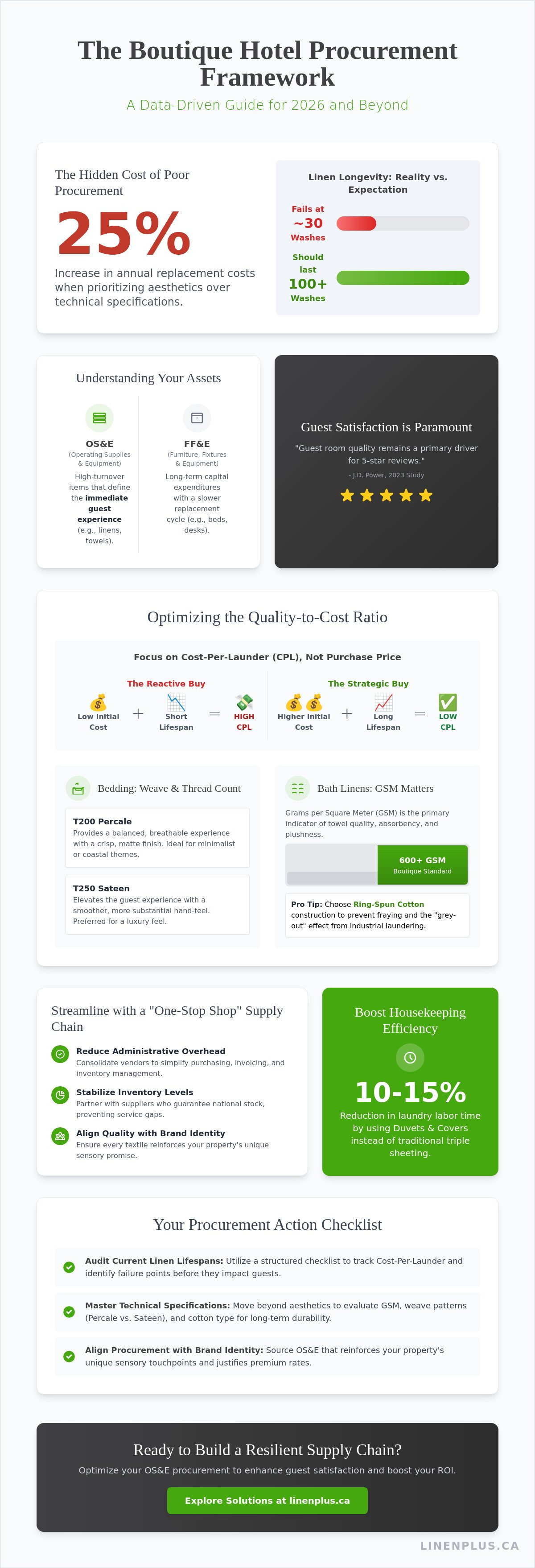
Did you know that boutique properties often face a 25% increase in annual replacement costs because they prioritize visual aesthetic over technical specifications like GSM and tensile strength? Most operators agree that maintaining a high-end atmosphere is essential, yet the reality of balancing brand consistency with bulk pricing remains a constant operational struggle. It's frustrating to see high-turnover linens lose their loft after just 30 industrial wash cycles when they should last through 100 or more. Mastering effective purchasing for boutique hotels requires a shift from reactive buying to a structured, data-driven procurement strategy.
This 2026 framework helps you solve the complexities of OS&E by focusing on textile longevity and supplier reliability. You'll learn how to secure premium guest essentials that withstand rigorous laundering while maintaining the unique character of your property. We'll preview specific methods for streamlining your supply chain, improving your textile ROI, and ensuring your guest satisfaction scores remain consistently high through 2026 and beyond.
Key Takeaways
- Learn how to move beyond generic hospitality sourcing by aligning OS&E procurement with your property’s unique sensory brand identity.
- Master technical textile specifications like GSM and weave patterns to ensure effective purchasing for boutique hotels that balances guest comfort with long-term durability.
- Streamline operational workflows by adopting a "one-stop shop" supply chain model that reduces administrative overhead and stabilizes national inventory levels.
- Utilize a structured procurement checklist to audit current linen lifespans and identify specific failure points before they impact the guest experience.
The High Stakes of Effective Purchasing for Boutique Hotels
Boutique procurement is the strategic sourcing of Operating Supplies and Equipment (OS&E) that reinforces a property's unique identity. Unlike mass-market chains that prioritize uniformity, boutique hotels rely on sensory touchpoints to justify premium rates. Generic hospitality procurement often fails these properties because it ignores the tactile quality of a 400-thread count sheet or the specific weight of a high-GSM towel. Effective purchasing for boutique hotels requires balancing these high-end specifications with the logistical realities of bulk supply chains.
Brand equity lives in the details. According to the 2023 J.D. Power North America Hotel Guest Satisfaction Index Study, guest room quality remains a primary driver for 5-star reviews. When a guest interacts with premium bath towels or high-quality sheets and pillowcases, they're validating the brand's promise. The core challenge is maintaining this premium feel while accessing wholesale economies of scale. Buyers must identify partners that offer institutional durability without sacrificing the residential aesthetic boutique guests expect.
OS&E vs. FF&E: Prioritizing High-Turnover Supplies
Procurement teams must distinguish between Furniture, Fixtures, and Equipment (FF&E) and OS&E. While FF&E involves long-term capital expenditures like beds and desks, OS&E covers high-frequency items that guests touch daily. These supplies define the immediate guest experience and require a more rigorous replacement strategy to maintain standards.
Because items like duvets and duvet covers face rigorous commercial laundering, vendor reliability is paramount. Effective purchasing for boutique hotels ensures that high-turnover supplies are always in stock, preventing service gaps that lead to negative guest feedback. A consistent supply chain for hospitality procurement allows managers to focus on guest service rather than inventory shortages.
Optimizing the Quality-to-Cost Ratio for Hospitality Textiles
Effective purchasing for boutique hotels requires moving beyond the initial purchase price to evaluate the Cost-Per-Launder (CPL) metric. A low-cost sheet that fails after 25 washes costs significantly more than a premium textile that maintains integrity for 75 or more cycles. Technical specifications like thread count and weave dictate this longevity. While Percale offers a crisp, matte finish, sateen provides a heavier, silkier feel often preferred in luxury settings. For detailed durability benchmarks, review the T-180 Percale Bed Sheets guide to understand how weave impacts long-term ROI.
Need Reliable Wholesale Supplies for Your Facility?
Hotels, healthcare facilities, restaurants, and commercial operations across Canada trust Linen Plus for consistent bulk supply and commercial-grade quality.

Bulk Wholesale Pricing
Competitive pricing for large-volume procurement.

Reliable Nationwide Supply
Consistent inventory and fast shipping across Canada.

Hospitality & Healthcare Grade
Products designed for demanding commercial environments.
Choosing the Right Bedding for Your Brand
Boutique operators must decide between T200 and T250 specifications to define their brand identity. T200 provides a balanced, breathable experience suitable for minimalist or coastal themes. Conversely, T-250 Sateen Bed Sheets elevate the guest experience through a smoother, more substantial hand-feel. Modern housekeeping teams also prioritize efficiency to manage rising labor costs. Utilizing Duvets and Covers instead of traditional triple sheeting can reduce laundry labor time by approximately 10% to 15% per room turn. It's a practical shift that doesn't sacrifice aesthetic appeal.
Bath Linens: GSM and Absorbency Standards
For towels, Grams per Square Meter (GSM) is the primary indicator of quality and guest satisfaction. Boutique properties should target 600+ GSM to provide the plush, absorbent feel guests expect from high-end accommodations. These Bath Towels should feature ring-spun cotton construction. This manufacturing process twists the fibers tightly, which prevents fraying and the "grey-out" effect caused by industrial laundering chemicals. Effective purchasing for boutique hotels hinges on these technical details to ensure operational excellence. As a complete solution for Canadian hospitality, choosing the right textile weight is the first step toward long-term fiscal responsibility.
Streamlining the Supply Chain: Bulk Sourcing for Boutique Brands
Effective purchasing for boutique hotels relies on moving away from fragmented buying patterns. Adopting a one-stop shop model reduces the administrative overhead associated with processing dozens of individual monthly invoices. This consolidation typically cuts administrative processing time by 20% and optimizes shipping costs through freight consolidation. Managers who streamline their supply chain spend less time tracking missing parcels and more time focusing on guest satisfaction.
National distribution is a critical component for boutique brands that operate across different regions. Consistent stock levels ensure that the guest experience remains uniform regardless of the property location. When selecting a vendor, prioritize those with direct manufacturer partnerships and total inventory transparency. A professional B2B partner should offer a complete solution, including dedicated account support and real-time stock alerts to prevent backorders. By choosing high-volume items like Dove IHG-exclusive toiletries, hotels gain access to premium guest amenities at a lower cost-per-unit. This balance of brand quality and fiscal responsibility is the Plus that a reliable supplier brings to your procurement framework.
Inventory Management and PAR Levels
Boutique hotels must adhere to the 3-PAR rule to maintain seamless operations and high service standards. This framework requires one set of linens in the guest room, one in the linen closet, and one in the laundry cycle. Maintaining this level of stock prevents service delays during 90% occupancy windows. To protect against global supply chain disruptions, work with established Hospitality Industry Solutions based in Canada. Local logistics expertise and regional distribution centers mean faster turnaround times and more dependable delivery schedules. This proactive inventory strategy ensures your facility is always prepared for the next check-in without overextending your storage capacity.
Optimize your procurement strategy today with our comprehensive hospitality supply solutions.
The Boutique Hotel Procurement Checklist
Effective purchasing for boutique hotels requires moving beyond reactive ordering and adopting a data-driven replenishment model. Managers often face a 15% to 20% annual linen loss rate due to mechanical wear or chemical degradation from high-pH detergents. Transitioning to a structured framework prevents service disruptions and stabilizes operational budgets. This checklist ensures effective purchasing for boutique hotels by aligning guest expectations with rigorous procurement standards.
- Step 1: Audit Current Lifespan: Track the number of industrial wash cycles each piece survives before thinning or fraying occurs. Identify if failures happen at the 50-wash or 100-wash mark to pinpoint laundry equipment issues or poor fabric quality.
- Step 2: Define Brand-Standard Specifications: Specify a minimum of T-250 or T-300 thread count for sheets and pillowcases to balance softness with durability. For guest bathrooms, standardize on a weight of 600 to 650 GSM for bath towels to provide a premium feel that maintains its loft after repeated laundering.
- Step 3: Consolidate Vendors: Use a single-source provider to reduce purchase order processing costs and qualify for tiered volume discounts. A consolidated approach simplifies logistics and ensures color consistency across different product batches.
- Step 4: Implement a Replenishment Schedule: Base orders on a 3.0 par level plus a 10% buffer for peak occupancy periods. Use 2026 occupancy forecasts to trigger automated reorders 30 days before seasonal surges.
For a deeper dive into long-term scaling, consult the Wholesale Linens Canada 2026 Guide for full procurement strategy.
Evaluating Vendor Reliability
A vendor's ability to fulfill orders during supply chain volatility determines your facility's success. Ask potential partners: "Do you offer direct manufacturer pricing to eliminate middleman markups?" and "What are your specific national shipping lead times for Western versus Eastern Canada?" Reliability isn't just about stock; it's about predictable transit times and consistent quality control.
Linen Plus serves as a complete solution for Canadian hospitality leaders by functioning as a one-stop shop for high-performance textiles. The organization provides the logistical infrastructure needed to manage bulk inventory without the overhead of multiple accounts. By focusing on durable, commercial-grade products, the platform helps boutique owners maintain their unique brand identity while benefiting from professional-grade supply chain efficiency.
Future-Proofing Your Boutique Procurement Strategy
Operating a boutique hotel in 2026 requires a shift from reactive buying to strategic sourcing. Managing the quality-to-cost ratio for high-GSM linens while maintaining a streamlined supply chain is essential for long-term profitability. By implementing a structured procurement checklist and prioritizing direct manufacturer partnerships, founders can eliminate the middleman and secure wholesale value. This approach ensures that every guest touchpoint, from premium thread counts to essential medical supplies, reflects a consistent commitment to excellence.
Implementing effective purchasing for boutique hotels isn't just about cutting costs; it's about building a resilient operational foundation. Efficient national distribution across Canada allows your team to maintain lean inventory levels without risking stockouts. Transitioning to a one-stop-shop model for your Operating Supplies and Equipment (OS&E) reduces administrative fatigue and consolidates your logistics. A dependable supply chain is the backbone of guest satisfaction.
Optimize your boutique hotel's procurement with Linen Plus to access a comprehensive inventory backed by local expertise and direct manufacturer partnerships. Your facility's success depends on reliable support, and the right partnership makes that excellence sustainable. You've got the vision for your brand, and the right tools will help you realize it.
Frequently Asked Questions
What is the difference between OS&E and FF&E in hotel procurement?
FF&E (Furniture, Fixtures, and Equipment) refers to long-term assets like beds and lighting, while OS&E (Operating Supplies and Equipment) covers consumable items like linens and cleaning chemicals. Effective purchasing for boutique hotels requires separate budgeting for these categories because FF&E is typically capitalized over a 7 year period. In contrast, OS&E items are treated as operating expenses with a replacement cycle of 12 to 18 months to maintain quality standards.
How many sets of linens should a boutique hotel have per room?
A boutique hotel should maintain a minimum of 4 par of linens per guest room to ensure operational continuity. This standard allocation includes one set on the bed, one in the laundry, one in the linen closet, and one resting to prevent fiber fatigue. Maintaining a 4 par inventory reduces the need for emergency wholesale orders and extends the lifespan of cotton fibers by allowing them to recover between industrial wash cycles.
What thread count is best for boutique hotel sheets?
The optimal thread count for boutique hotel sheets falls between 250 and 300, specifically in a sateen or percale weave. Higher thread counts often result in heavier fabrics that trap heat and increase commercial drying times, which raises utility costs. A 300 thread count cotton-rich blend provides the premium hand-feel guests expect while maintaining the durability required for 100 or more wash cycles before the fabric shows signs of wear.
How can boutique hotels reduce the cost of guest amenities?
Boutique hotels can reduce guest amenity costs by transitioning from single-use plastic bottles to high-quality bulk dispensing systems. According to 2023 industry reports from the AHLA, hotels can save up to 30 percent on liquid product costs by purchasing in 1 gallon or 5 gallon containers. Selecting a one-stop shop for these bulk supplies streamlines logistics and reduces the freight expenses associated with managing multiple small shipments from various vendors.
Why should I choose a national distributor over local boutique suppliers?
National distributors provide superior supply chain stability and bulk pricing advantages that local boutique suppliers often lack. By leveraging a single-source partner, hotels gain access to a complete solution that includes consistent SKU availability and integrated Canadian logistics. This centralized approach simplifies effective purchasing for boutique hotels by reducing the administrative burden of managing 20 or more individual vendor contracts and disparate delivery schedules across different regions.

Article by
Sohel Shahriar
Sohel Shahriar is the Chief Growth Officer (CGO) at Linen Plus Inc., Canada, bringing a strategic blend of growth marketing, brand leadership, and content expertise. Through his writing, he explores how quality linen, smart sourcing, and long‑term partnerships can create measurable impact for healthcare and hospitality organizations.


