


Did you know that percale sheets can typically withstand over 200 commercial wash cycles, while sateen weaves often require replacement after just 150? In a global hospitality market projected to reach $12.2 billion by the end of 2026, making the wrong procurement choice directly impacts your bottom line through premature pilling and high replacement costs. Deciding on percale vs sateen hotel sheets isn't just about the hand-feel. It's a strategic decision that influences your laundry energy consumption and room turnover speed.
We understand that balancing guest complaints about sleeping too hot with the need for crisp, wrinkle-free bedding is a constant challenge for operations managers. This guide provides the technical breakdown you need to optimize guest satisfaction and textile longevity in your facility. You'll learn how to select the specific weave that maximizes your cost-per-use while reducing the time your staff spends at the ironing station. We also examine how current industry trends and new textile regulations, such as the California Responsible Textile Recovery Act, are shaping the future of hospitality procurement across North America.
Key Takeaways
- Identify the structural differences between the matte, one-over-one percale weave and the lustrous, four-over-one sateen weave to predict long-term fabric performance.
- Evaluate tensile strength and pilling resistance to ensure your linens survive high-heat industrial laundry cycles without compromising the guest experience.
- Determine the best weave for your climate and guest profile, prioritizing percale for maximum breathability or sateen for a premium, silky drape.
- Optimize your procurement strategy for percale vs sateen hotel sheets by aligning T200 and T250 thread counts with your specific facility turnover requirements.
- Reduce operational overhead by selecting weaves that minimize wrinkling and decrease the labor hours required for rapid room preparation.
Defining Percale and Sateen Weaves for Hospitality Operations
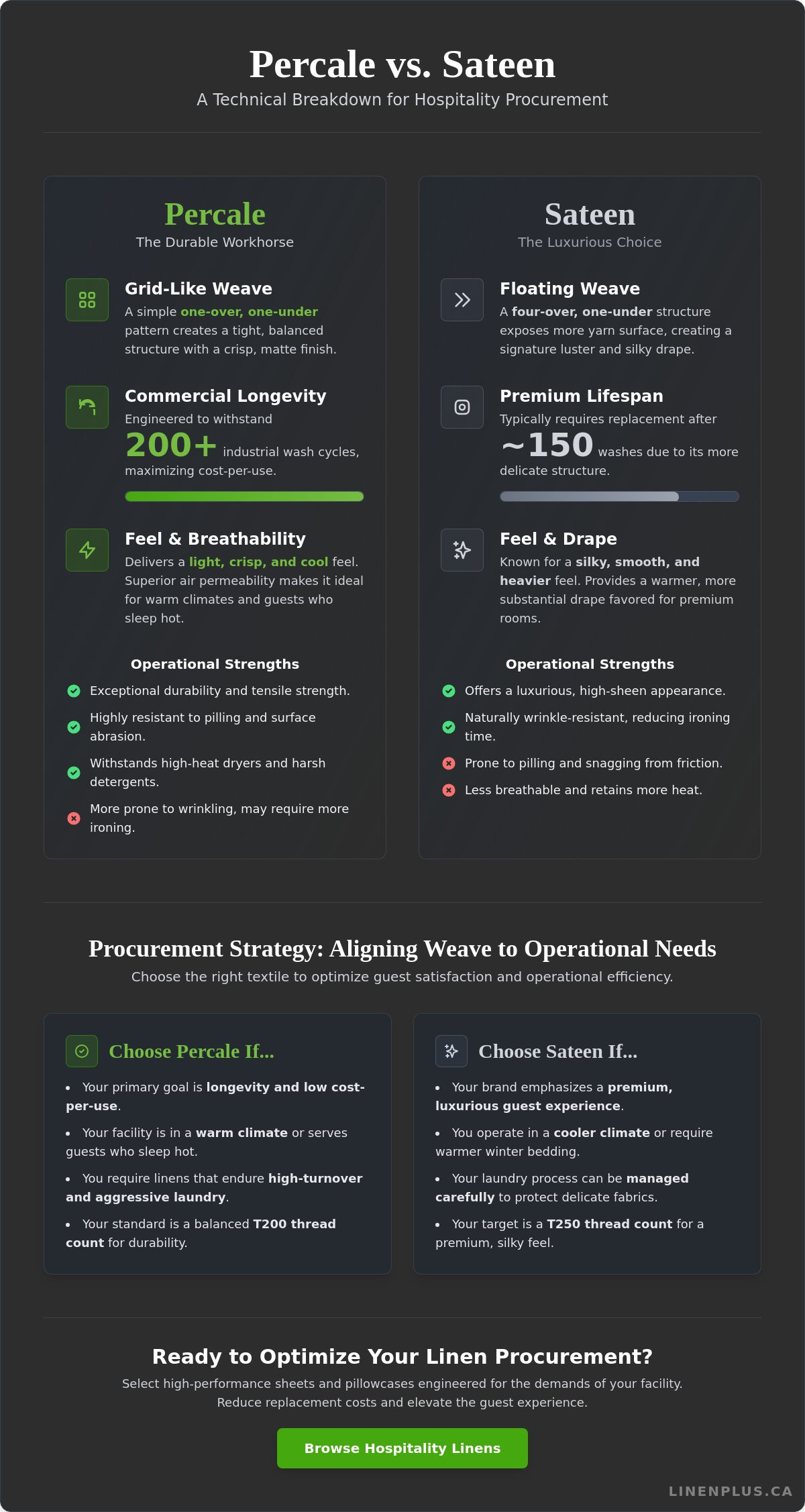
For hospitality operations, the decision between percale and sateen is a matter of long-term fiscal efficiency. Thread count is often used as a marketing shorthand, but the weave pattern dictates how a sheet handles high-heat commercial laundering. When comparing percale vs sateen hotel sheets, the primary difference lies in the interlacing of the warp and weft yarns. It's the architecture of the fabric, not just the density, that determines whether a sheet survives 150 or 200 wash cycles.
A percale weave follows a simple one-over, one-under pattern. This creates a balanced, tight structure that is highly durable. According to the technical definition of What is Percale, the fabric must maintain a specific thread density to achieve its signature matte finish. In contrast, sateen utilizes a four-over, one-under weave. This "floated" yarn technique exposes more surface area, resulting in a distinct sheen and a heavier drape. For a deeper look at sourcing these materials for your facility, refer to our Wholesale Linens Canada: The 2026 Commercial Procurement Guide.
The Technical Anatomy of a Percale Weave
The grid-like architecture of percale allows for superior air permeability. This makes it the industry standard for warm climates or guests who sleep hot. Beyond comfort, the tight weave provides exceptional tensile strength. It resists the fraying and structural degradation often caused by harsh industrial detergents. Operations managers prefer this weave because it minimizes pilling. This ensures the fabric remains smooth and professional after 200 or more wash cycles, maximizing your investment.
The Structural Characteristics of Sateen
Sateen's four-over-one structure creates a luxurious, silky feel that many boutique hotels favor for winter months. The increased density makes the fabric feel warmer and more substantial. However, the floated threads that provide the shine are also vulnerable to friction. Over time, these exposed yarns can catch or "fuzz," leading to pilling in high-traffic areas of the bed. While sateen offers an immediate luxury factor for premium suites, it requires careful monitoring of laundry temperatures to maintain its finish. You can explore our specific T-250 sateen options to see how they fit your room turnover strategy.
Longevity and Durability in Commercial Laundry Cycles
High-turnover facilities require linens that withstand aggressive mechanical processing without losing structural integrity. When comparing percale vs sateen hotel sheets in a commercial setting, the primary differentiator is how each weave handles the mechanical stress of a tunnel washer and high-heat dryers. Percale's balanced 1:1 weave is built for endurance, typically surviving over 200 commercial wash cycles. Sateen, while luxurious, often requires replacement after approximately 150 cycles due to the inherent vulnerability of its structure.
Need Reliable Wholesale Supplies for Your Facility?
Hotels, healthcare facilities, restaurants, and commercial operations across Canada trust Linen Plus for consistent bulk supply and commercial-grade quality.

Bulk Wholesale Pricing
Competitive pricing for large-volume procurement.

Reliable Nationwide Supply
Consistent inventory and fast shipping across Canada.

Hospitality & Healthcare Grade
Products designed for demanding commercial environments.
The debate of Percale vs. Sateen Sheets often overlooks the impact of industrial heat. Percale remains stable under the high temperatures of commercial dryers because its threads are tightly locked. Sateen, with its longer yarn floats, is more susceptible to structural weakening when exposed to standard 160°F drying cycles. If your facility prioritizes a lower replacement rate, you can browse high-durability hospitality sheets and pillowcases to find options engineered for these rigorous environments.
Managing Pilling and Surface Abrasion
The one-over-one percale weave creates a high frequency of interlacing points. This effectively anchors individual fibers in place, preventing them from migrating to the surface during heavy agitation. Pilling is the result of fiber breakage in looser weaves where friction causes broken ends to tangle into small spheres. Because sateen has fewer interlacing points, the exposed "floats" are more vulnerable to this surface abrasion. Over several months of daily use, this leads to a "fuzzy" texture that guests often perceive as aged or worn.
Chemical Resistance and Tensile Integrity
Commercial laundry utilizes heavy-duty alkaline detergents and chlorine bleach to meet stringent hygiene standards. Percale's tight structure limits the penetration of these chemicals into the yarn core, preserving the fabric's tensile integrity over time. Sateen's looser structure allows for faster chemical absorption, which can accelerate fiber degradation if the wash pH isn't perfectly neutralized. During the calendering process, industrial irons press the fabric at high pressure. While this enhances sateen's sheen temporarily, it can also flatten the floated threads, eventually leading to a loss of that signature luster. Choosing the right weave ensures your investment retains its professional appearance through every stage of the laundry cycle.
Guest Experience: Breathability, Drape, and Seasonal Comfort
Guest sleep quality is a primary driver of online ratings and repeat bookings. When analyzing percale vs sateen hotel sheets, facility managers must consider the specific sleep environment of their rooms. Percale's one-over-one weave allows for maximum airflow. This makes it the industry standard for guests who sleep hot or for use during peak summer seasons. Sateen's structure is denser. It provides a heavier drape that feels more substantial and warmer, which many guests associate with a traditional luxury experience.
Strategic procurement involves more than just hand-feel. It directly impacts your utility costs. Percale is inherently lighter than sateen because of its tight, thin weave. This reduced fabric weight translates to shorter drying times in commercial laundries. You'll lower energy consumption per load while maintaining a high standard of comfort. To complete a high-end look while maintaining these benefits, you can explore premium duvet covers for hotel suites that complement your chosen weave.
The Sleep Foundation's guide on defining percale and sateen highlights how weave affects temperature. While sateen provides a lustrous feel, its reduced breathability can lead to guest complaints about overheating in non-conditioned environments. Balancing these factors is essential for maintaining high sleep quality ratings across your property portfolio. Ensure your facility is prepared for every season and stock T200 percale and T250 sateen options today.
Optimizing for the Canadian Climate
Northern facilities often adopt a seasonal rotation to manage guest comfort. Sateen's four-over-one structure creates a warmer microclimate, making it ideal for Canadian winter bedding setups where heat retention is a benefit. Conversely, percale's moisture-wicking properties are essential for high-humidity summer months. This ensures guests remain cool and dry even during temperature spikes, reducing the need for aggressive air conditioning use.
Aesthetic Maintenance and Wrinkle Resistance
Maintaining a "hotel crisp" aesthetic requires different labor inputs depending on the weave. Percale offers that classic, stiff finish but requires professional pressing to avoid a rumpled appearance. It's the standard for the sharp, military-style bed make-up. Sateen's looser weave resists wrinkles more naturally because the threads have more room to move. This can reduce room turnover time and labor costs if your facility doesn't use a large-scale calender iron for every sheet.
Procurement Strategy: Choosing Between T200 and T250
Selecting the right inventory requires a calculated balance between initial acquisition cost and the total cost of ownership. The choice of percale vs sateen hotel sheets often dictates your operational budget for the next 18 to 24 months. While thread count is a common metric, the weave determines how many guest nights you can extract from a single set of linens before pilling or thinning occurs. For managers looking for comprehensive solutions for the hospitality industry, aligning the thread count with the specific demands of the facility is the most effective way to protect profit margins.
When to Invest in T200 Percale
T200 percale is the primary choice for high-turnover environments like motels, shelters, and standard hotel rooms. Its economic efficiency stems from its longevity. Since these sheets can withstand over 200 commercial washes, the cost-per-use is lower than higher thread count alternatives. The focus here is on tensile strength and the ability to maintain a professional appearance without frequent replacements. It's the most dependable option for facilities that prioritize operational throughput and consistent, crisp aesthetics over a silky hand-feel.
When to Upgrade to T250 Sateen
Facilities such as luxury Airbnbs, boutique hotels, and executive suites benefit from the marketing value of T250 sateen. Guests in these segments often equate a subtle sheen and a soft drape with premium service. This perception directly influences guest reviews and booking rates. While sateen has a shorter lifespan of roughly 150 cycles, the potential for higher nightly rates often justifies the more frequent replacement schedule. It's a strategic investment in the guest's sensory experience.
Calculating your return on investment involves looking past the invoice price. You must factor in the 25% difference in wash-cycle longevity between the two weaves. Additionally, consider the labor costs associated with room turnover. If your facility lacks high-speed ironing equipment, sateen's natural wrinkle resistance can save minutes per room, potentially reducing your total labor spend. Conversely, if energy efficiency is your goal, percale's faster drying time offers a measurable reduction in utility overhead. By matching the weave to your specific operational constraints, you ensure long-term fiscal responsibility.
Future-Proofing Your Hospitality Linen Inventory
Choosing the right weave is a strategic decision that directly affects your facility's bottom line. By prioritizing thread cohesion over simple thread count, you ensure your linens withstand the rigorous demands of commercial laundering. We've established that percale offers maximum durability and breathability for high-turnover rooms, while sateen provides the premium drape required for luxury suites. Your final decision on percale vs sateen hotel sheets should align with your specific regional climate, guest expectations, and long-term ROI goals.
We support your operational excellence through direct manufacturer partnerships that provide competitive bulk pricing and industry-leading T200 and T250 specifications. Our nationwide Canadian distribution ensures your facility remains prepared for peak seasons without logistical delays. Shop our full collection of commercial-grade hotel sheets to secure your inventory for the upcoming year. Investing in high-quality textiles is the most reliable way to improve guest ratings while controlling replacement costs. Build a more resilient and efficient hospitality operation today.
Frequently Asked Questions
Which is more durable for hotel use, percale or sateen?
Percale is the most durable choice for high-turnover hospitality environments. Its one-over-one weave structure provides higher tensile strength compared to the four-over-one structure of sateen. This allows percale linens to withstand the aggressive mechanical agitation and chemical exposure of industrial laundry cycles for significantly longer. While sateen offers a softer initial feel, it often requires replacement sooner due to structural thinning and fiber degradation.
Do sateen sheets pill more than percale in industrial laundries?
Sateen weaves are more susceptible to pilling because of their long floated threads. These exposed yarns are easily abraded during the wash and dry cycles, leading to fiber breakage and the formation of small fuzz balls on the surface. Percale's tighter interlacing points lock the fibers in place more effectively. This resistance to surface abrasion ensures that the fabric maintains a smooth, professional appearance even after 200 wash cycles.
What is the best thread count for commercial hotel sheets?
The optimal range for commercial hotel sheets is between T200 and T300. For standard rooms and high-turnover facilities, a T200 percale offers the best balance of cost and longevity. Luxury suites often utilize a T250 or T300 sateen to provide a more premium hand-feel. Selecting a thread count higher than 400 is typically counterproductive in hospitality. It increases drying times and lowers fabric breathability without providing a proportional increase in guest satisfaction.
Are percale sheets cooler for guests who sleep hot?
Percale is the industry standard for thermoregulation because its grid-like weave allows for superior air circulation. This breathability helps wick moisture away from the guest's skin, preventing the clammy feeling often associated with denser fabrics. When comparing percale vs sateen hotel sheets for summer peak seasons, percale is the clear winner for guest comfort. It prevents heat from becoming trapped beneath the covers during the night.
Which weave requires more ironing in a professional setting?
Percale requires more intensive professional pressing to achieve a crisp, wrinkle-free look. Its tight, stiff structure holds fold lines and creases more stubbornly than the looser sateen weave. Sateen possesses natural wrinkle resistance because the floated threads allow the fabric to drape and smooth out more easily. Facilities without a large-scale calender iron may find sateen more efficient for rapid room turnovers despite its shorter operational lifespan.

Article by
Sohel Shahriar
Sohel Shahriar is the Chief Growth Officer (CGO) at Linen Plus Inc., Canada, bringing a strategic blend of growth marketing, brand leadership, and content expertise. Through his writing, he explores how quality linen, smart sourcing, and long‑term partnerships can create measurable impact for healthcare and hospitality organizations.


