


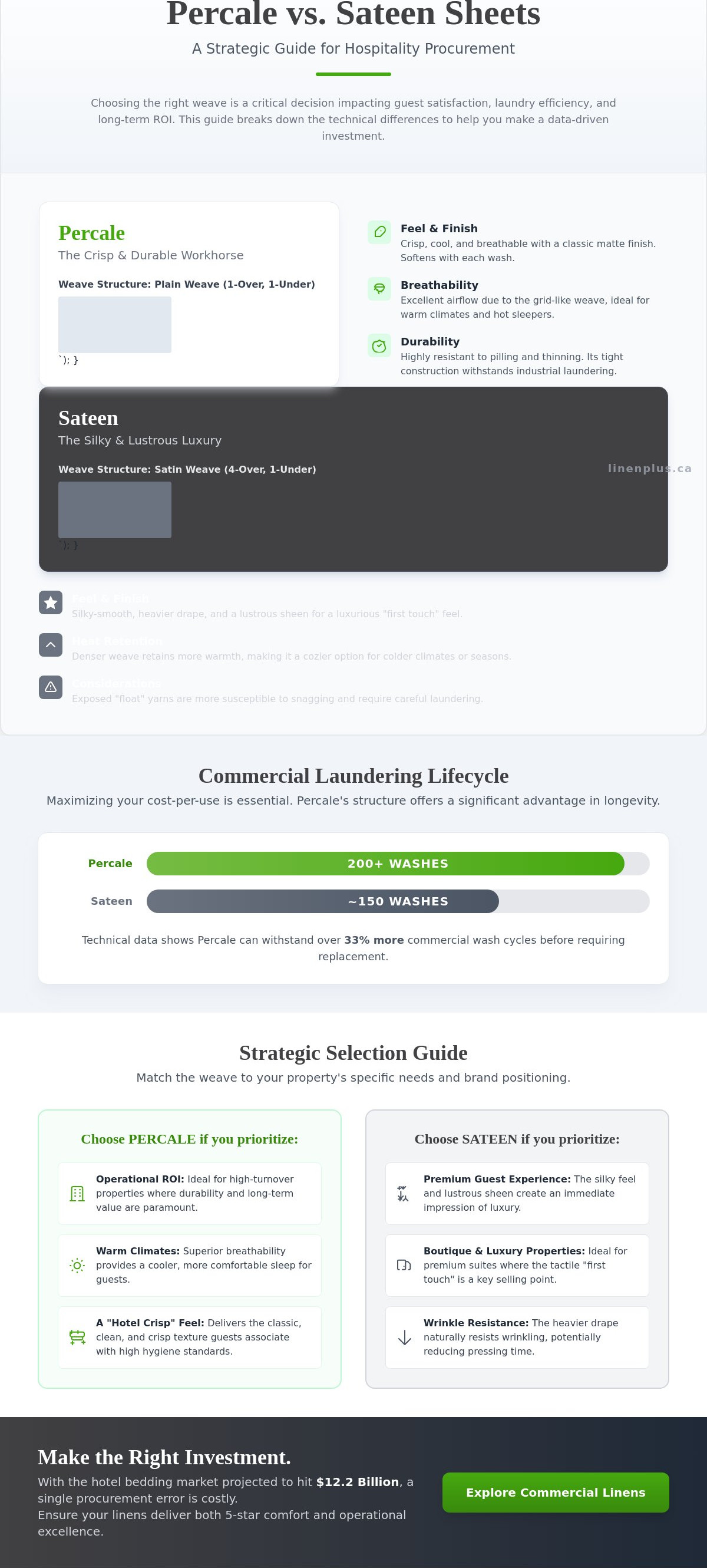
With the global hotel bedding market projected to reach $12.2 billion in 2026, a single procurement error in weave selection can lead to thousands in premature replacement costs. Technical data shows that percale can typically withstand over 200 commercial wash cycles, while sateen often requires replacement after 150. Choosing between percale vs sateen sheets for hospitality is no longer just a matter of guest preference; it's a strategic decision that directly impacts your facility's labor efficiency and bottom line.
You know that a guest's first impression is often defined by the crispness of their linens, yet you're likely facing the pressure of thinning fabrics and high ironing times. We'll help you master the technical differences between these weaves to ensure your property maintains a 5-star standard while maximizing your long-term ROI. This guide provides a detailed comparison of weave durability, maintenance requirements, and how upcoming regulations, like the July 1, 2026, producer registration deadline for textile recovery, will influence your commercial purchasing decisions.
Key Takeaways
- Differentiate between the matte, crisp finish of percale and the lustrous, silky drape of sateen to align linens with your property’s specific brand aesthetic.
- Evaluate the impact of industrial laundering on fiber longevity, specifically how percale’s tight construction resists pilling better than sateen’s exposed surface yarns.
- Master the trade-offs of percale vs sateen sheets for hospitality to select the ideal weave for your property tier, balancing guest comfort with long-term ROI.
- Improve seasonal guest satisfaction by leveraging percale’s high breathability for temperature regulation or sateen’s density for heat retention in colder climates.
- Streamline laundry operations by identifying which weave offers the best wrinkle resistance to reduce total labor time spent on pressing and finishing.
Understanding the Weave: Percale vs Sateen Performance in Hotels
The mechanical architecture of the weave is the primary factor in determining the performance of percale vs sateen sheets for hospitality. Percale utilizes a traditional "one-over, one-under" plain weave, creating a matte finish that's exceptionally durable. In contrast, sateen is constructed with a "four-over, one-under" weave pattern. This structure exposes more surface yarn, known as floats, which creates a lustrous sheen and a heavier drape. This mechanical layout determines the "hand" or tactile feel of sheets and pillowcases, dictating how they react to the friction and heat of industrial processing. While percale remains rigid and breathable, sateen offers a more fluid, substantial weight that feels silky against the skin.
The Physics of the Percale Weave
For a deeper Understanding the Percale Weave, consider the grid-like symmetry of the fibers. This tight interlacing promotes significant airflow and maintains structural integrity through hundreds of high-temperature wash cycles. Unlike sateen, percale's balanced construction allows it to withstand high-pressure commercial ironing without losing its characteristic matte texture or developing the "shiny" patches sometimes seen on over-pressed fabrics. It provides that specific "hotel crisp" feel that guests associate with professional laundering and high-end hygiene standards, making it a dependable choice for high-turnover environments.
The Aesthetic Appeal of Sateen
Sateen's visual identity is defined by its light-reflecting properties. Because the yarn floats across four threads before interlacing, the surface is smoother and looks more expensive under guest room lighting. This weave density creates a warm, buttery sensation during the "first touch" guest experience, which can be a deciding factor for luxury properties. However, the same floats that provide the sheen are more susceptible to snagging or fiber stress when exposed to aggressive industrial chemicals and high-heat drying. It's a strategic choice for premium suites where the immediate tactile impression of luxury is the priority over pure utilitarian longevity.
Commercial Durability and Laundering Lifecycle Analysis
Analyzing the lifecycle of percale vs sateen sheets for hospitality requires looking beyond the initial invoice. Percale’s tight, grid-like construction excels at resisting pilling and thinning because it lacks the long "floats" found in sateen. While sateen is at its peak softness on day one, its delicate surface sheen often degrades under the stress of industrial chemicals and high-heat drying. In contrast, percale actually softens over time, improving its hand-feel after the first dozen washes. For facility managers, the goal is maximizing cost-per-use. Research indicates that percale can withstand over 200 commercial wash cycles, whereas sateen typically begins to show wear after 150 cycles.
Need Reliable Wholesale Supplies for Your Facility?
Hotels, healthcare facilities, restaurants, and commercial operations across Canada trust Linen Plus for consistent bulk supply and commercial-grade quality.

Bulk Wholesale Pricing
Competitive pricing for large-volume procurement.

Reliable Nationwide Supply
Consistent inventory and fast shipping across Canada.

Hospitality & Healthcare Grade
Products designed for demanding commercial environments.
Thread Count Tiers: T200 vs T250 Performance
Selecting the right tier depends on your property’s specific turnover rate. T200 Percale is the industry workhorse. It balances breathability with extreme tensile strength, making it ideal for high-occupancy environments where durability is paramount. T250 Sateen provides a higher-density feel that caters to boutique hotels or premium suites. When Optimizing Guest Comfort, remember that higher density often means slower drying times in the laundry. You can find more data on textile lifespans and procurement strategies in our 2026 Commercial Procurement Guide.
Wrinkle Management in Professional Laundries
Many operators worry that percale creates excessive labor costs due to wrinkling. Modern poly-cotton blends have largely solved this, providing a crisp look with minimal pressing. Sateen naturally resists wrinkles better due to its weave weight, but it requires precise temperature control during ironing to maintain its luster. If your laundry team uses high-pressure rollers, sateen may develop a flattened, dull appearance over time. If you're looking to optimize your inventory for better labor efficiency, explore our range of commercial sheets and pillowcases designed specifically for industrial processing.
Optimizing Guest Comfort: Breathability and Tactile Preferences
Thermoregulation's a critical component of the guest experience, particularly when managing properties in variable environments. Choosing between percale vs sateen sheets for hospitality involves balancing the fabric's breathability with your local climate. In colder Canadian regions, sateen’s higher density provides an essential layer of insulation, helping guests stay warm without over-relying on heating systems. However, this thermal performance must be viewed as part of a complete system that includes the duvet cover and insert. While 70% of luxury hotels prioritize high-quality bedding for satisfaction, the choice of weave often dictates how guests perceive the cleanliness and temperature of the room. Pairing these selections with premium bath linens ensures a consistent tactile experience throughout the stay.
The "Cool and Crisp" Factor
Percale’s plain weave allows for maximum airflow, making it the standard for properties without 24/7 climate control or those located in humid regions. Guests often associate the "cool to the touch" sensation with high hygiene standards. This "crisp" finish acts as a psychological marker of a fresh, clean room. Experts discussing percale vs. sateen for hotels highlight that percale is particularly effective for "hot sleepers" who require moisture-wicking properties for a restful night. It's a dependable choice that minimizes complaints about stuffy or overheated rooms.
The "Silky and Substantial" Factor
Sateen offers a sense of "enclosure" that many travelers find comforting during winter months. Its heavier drape creates a spa-like atmosphere, especially when complemented by high-end guest toiletries. This combination reinforces a premium brand identity by focusing on a soft, indulgent feel. If your property targets the luxury segment, sateen’s substantial weight can enhance the perceived value of the suite. It's a strategic choice for creating a cozy, high-end environment that encourages positive guest reviews.
Ready to upgrade your guest experience? Browse our full selection of wholesale sheets and pillowcases to find the ideal weave for your facility.
Strategic Selection: Matching Bedding to Your Hospitality Vertical
Successful procurement requires aligning your linen choice with your property’s operational realities. For short-term rentals and Airbnbs, the priority is often ease of care and the ability to process linens quickly between guests. Mid-scale hotels typically find that percale offers the most efficient balance of price and longevity, especially when considering the 7.5% CAGR expected in the hotel bedding market by 2026. Conversely, luxury properties often accept the shorter replacement cycle of sateen to deliver a superior visual impact that justifies higher room rates. Sourcing through a dedicated hospitality supplier is vital to ensure consistent dye lots and reliable reorder availability, preventing a mismatched inventory that can detract from guest perceptions.
The Case for Percale in High-Volume Facilities
T200 Percale is the definitive choice for high-turnover institutions like shelters, worker camps, and student residences. Its high tensile strength allows it to withstand the aggressive laundering necessary for hygiene. In facilities that manage both lodging and medical supplies, percale’s ability to endure high-heat sanitization without fiber degradation is a critical safety and fiscal advantage. It remains the most cost-effective solution for maintaining a professional appearance under heavy use.
The Case for Sateen in Boutique and Premium Suites
Boutique hotels often use sateen as a key differentiator in Executive or Honeymoon suites. The silky finish and substantial drape help justify a higher ADR by signaling a premium experience. Before committing to a bulk order, operations managers should perform a friction test on sateen samples. Wash the sample five times at maximum temperature and check for surface pilling or loss of luster. This ensures your investment in percale vs sateen sheets for hospitality aligns with your specific brand standards and guest expectations.
Future-Proofing Your 2026 Linen Procurement Strategy
Deciding between percale vs sateen sheets for hospitality is a strategic choice that balances physical durability with the guest experience. You've seen how percale’s 200+ wash cycle lifespan supports high-volume operations, while sateen’s lustrous finish serves as a critical differentiator for premium room tiers. Success in the 2026 market requires looking beyond thread count to the technical weave performance that best suits your property’s specific climate and turnover rate.
Our direct manufacturer partnerships ensure you receive consistent quality and dye lots with every order. With national Canadian distribution, we provide the rapid fulfillment required to maintain seamless facility operations. Shop Wholesale Hospitality Bedding and Linens to secure specialized T200 and T250 commercial-grade textiles for your property. By selecting the right weave for your vertical, you'll reduce replacement costs while maintaining the five-star comfort your guests expect. We're here to support your facility’s operational excellence with dependable, solution-oriented textile programs.
Frequently Asked Questions
Which sheets are more durable for commercial washing, percale or sateen?
Percale is significantly more durable than sateen due to its balanced one-over, one-under weave structure. This tight interlacing prevents the surface snagging and fiber thinning that often occurs with sateen's longer thread floats. Commercial laundries find that percale maintains its tensile strength even when subjected to the high-pressure rollers and aggressive detergents required for institutional hygiene. It's the superior choice for high-occupancy facilities prioritizing long-term inventory longevity.
Do percale sheets always wrinkle more than sateen in a hotel setting?
Pure cotton percale naturally wrinkles more than sateen, but modern poly-cotton hospitality blends have significantly closed this gap. While sateen's heavier drape resists creases, a high-quality percale blend processed through a professional ironer delivers the crisp finish guests associate with premium hygiene. If your facility lacks high-heat pressing equipment, sateen might offer a smoother appearance directly out of the dryer, though it lacks the signature snap of a well-maintained percale.
Is sateen or percale better for guests who sleep hot?
Percale is the optimal choice for hot sleepers because its breathable weave allows for maximum thermal regulation. The grid-like structure doesn't trap body heat, making it the industry standard for summer seasons and warmer geographic regions. When evaluating percale vs sateen sheets for hospitality, remember that sateen’s denser pattern creates a barrier that retains warmth. This makes sateen more suitable for winter climates or properties focusing on a cozy, enclosed sleep experience.
What thread count is best for hospitality percale sheets?
A 200 thread count is considered the ideal specification for commercial percale because it balances tactile softness with extreme industrial durability. While residential buyers often chase higher numbers, professional procurement managers know that excessively high thread counts can reduce breathability and increase drying times in the laundry. A T200 construction ensures the fabric remains lightweight enough for rapid processing while providing the opaque, professional look required for guest room beds.
How many wash cycles can I expect from a high-quality sateen sheet?
You can generally expect approximately 150 wash cycles from a high-quality sateen sheet before it begins to show visible surface wear or loss of luster. This lifecycle is shorter than percale because the exposed surface yarns are more vulnerable to the friction of industrial laundering. To maximize the ROI of percale vs sateen sheets for hospitality, ensure your laundry team uses pH-balanced detergents and avoids over-drying, which can make sateen fibers brittle and prone to pilling.

Article by
Sohel Shahriar
Sohel Shahriar is the Chief Growth Officer (CGO) at Linen Plus Inc., Canada, bringing a strategic blend of growth marketing, brand leadership, and content expertise. Through his writing, he explores how quality linen, smart sourcing, and long‑term partnerships can create measurable impact for healthcare and hospitality organizations.


